
In this post: the 10% rule — training treats — biscuits vs chews — high-value rewards — reading labels — human food traps — dog treats in India — meals vs treats — straight answers
Dog Treats: Training Picks, Calories, and What to Avoid
Dog treats should stay under 10% of daily calories. Garima on dog training treats, best dog treats in India, label red flags, and when table scraps backfire.

15 Jun 2026 · 5 min read
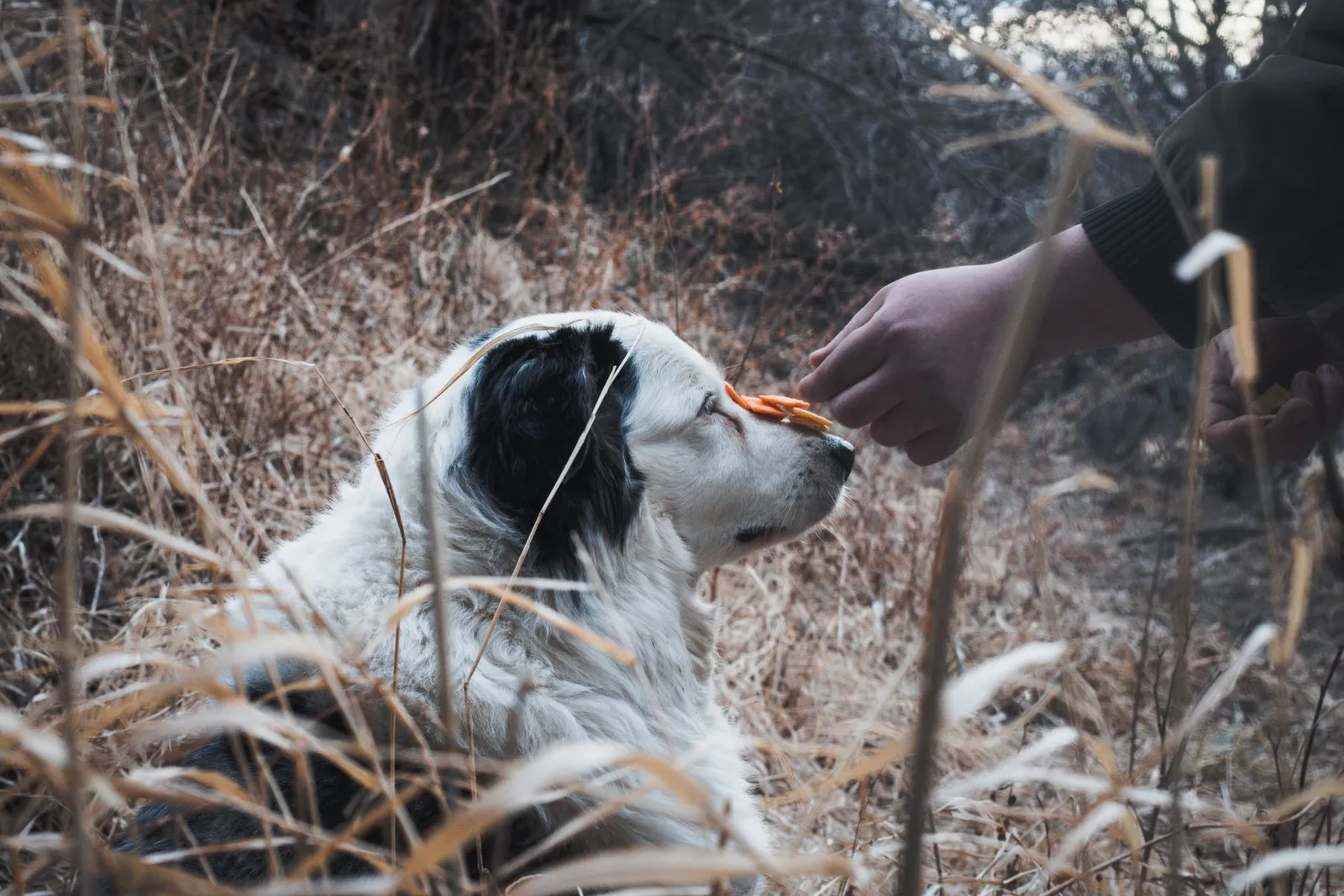
They will eat a sock but not the ₹800 kibble. Classic. Straight answer on dog treats: they are useful for training, bonding, and the occasional bribe — but only when they stay under about 10% of your dog's daily calories and you match the treat to the job. A crunchy biscuit and a pea-sized training treat are not interchangeable. Neither is last night's paneer.
If your dog is gaining weight, refusing meals, or itching after every snack run, the treat drawer is the first place I look — not the main food bag.
Dog treats work when they stay under 10% of daily calories
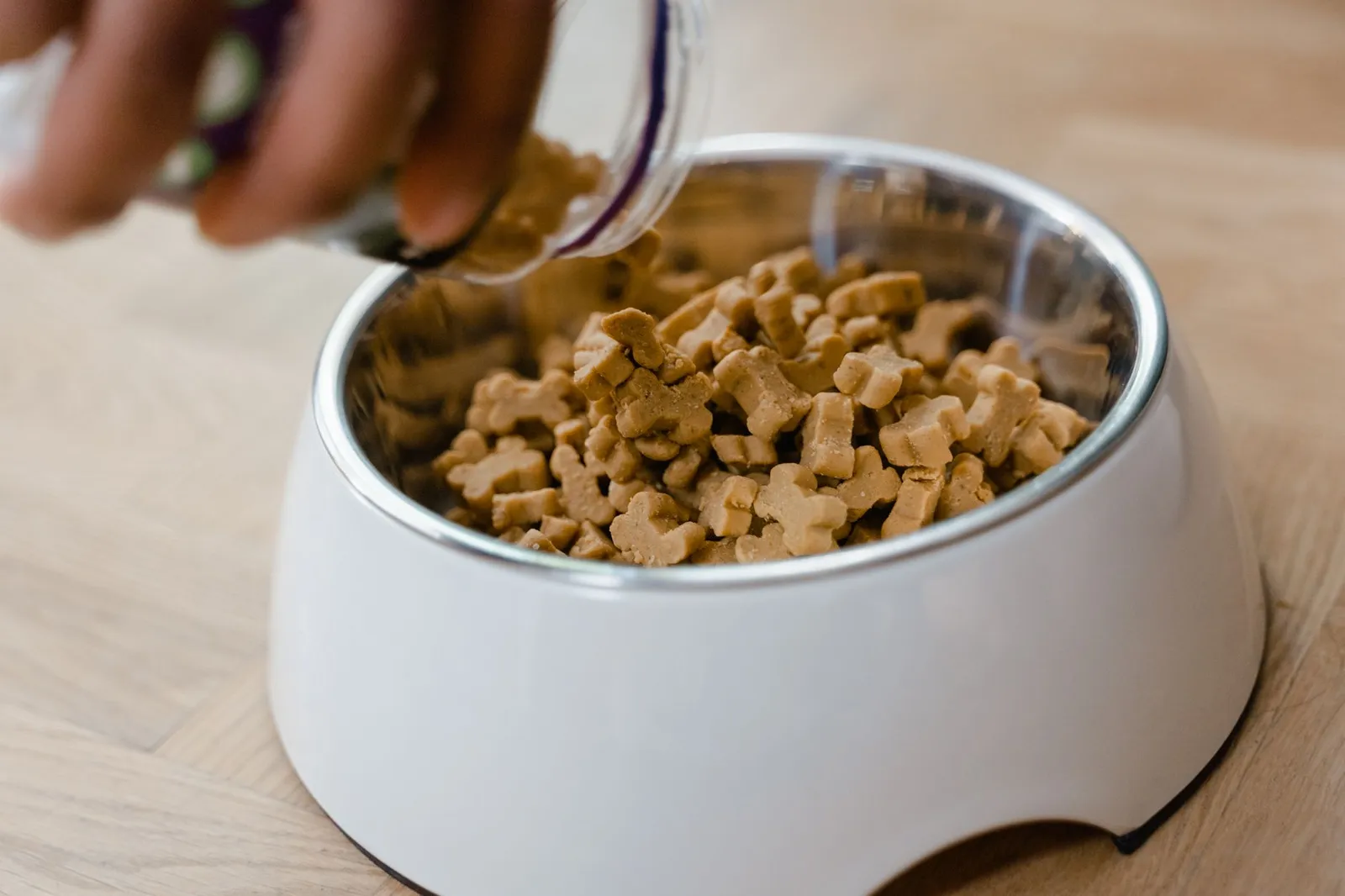
Most vets and nutrition bodies use the same rough rule: treats should make up no more than 10% of total daily calories. The other 90% should come from a complete, balanced diet — kibble, wet food, or a formulated fresh meal.
That percentage sounds generous until you run a training session. Twenty rewards in ten minutes adds up fast. A medium dog on 200 g of food per day might only have room for a tablespoon of extras if you are counting honestly.
Rule of thumb: if you train daily, use low-calorie dog training treats you can break into tiny pieces. Save bigger biscuits for once-a-day rewards. Our dog food chart on Sploot maps daily meal amounts by size so you know what the 90% baseline actually is before you open the treat pouch.
Weight gain on the same main food often means treat math went quiet. Kitchen scraps, biscuit jars, and well-meaning visitors all count.
Training treats need to be small, soft, and worth showing up for
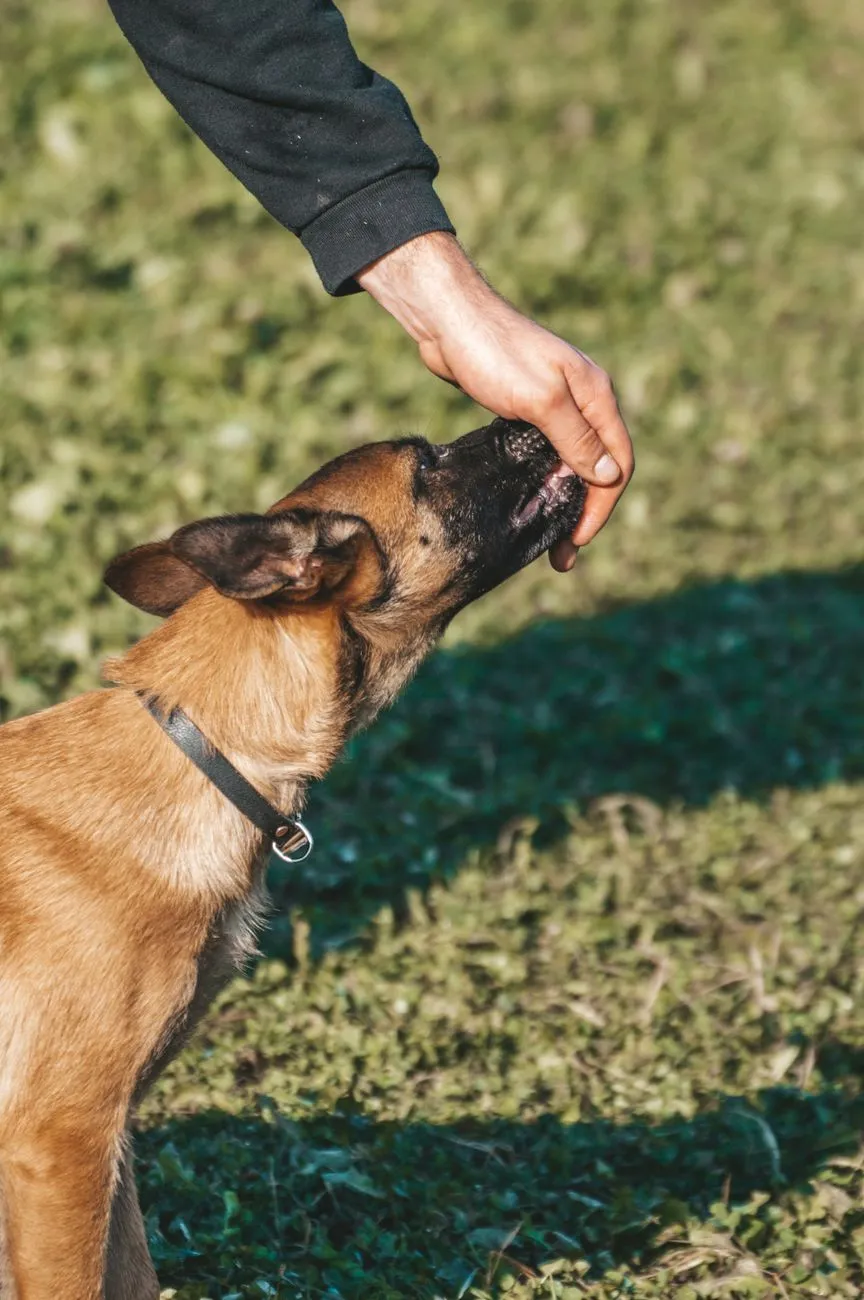
Dog treats for training follow what trainers call the three S's: small, soft, and smelly. Pea-sized pieces let you reward often without blowing the calorie budget. Soft texture means your dog swallows fast and refocuses on you instead of grinding a bone-shaped biscuit for thirty seconds.
Strong scent matters more than fancy packaging. If you can smell it, your dog probably cares. Freeze-dried chicken, soft cheese bites, and single-ingredient training treats work because they feel special in the moment.
For puppy basics — sit, recall, crate — dog training treats should be boring enough to use in bulk and exciting enough that the puppy chooses you over the dust bunny. Our post on how to stop puppy biting covers where treat timing fits into bite inhibition work. Puppies have short attention spans. Waiting for a chew breaks the rhythm.
Keep treats in a pocket or pouch, not the main food bowl. Mixing training rewards with meals teaches dogs that the bowl is optional and your hand is where the good stuff lives. That is how picky eaters are built.
Recommended products
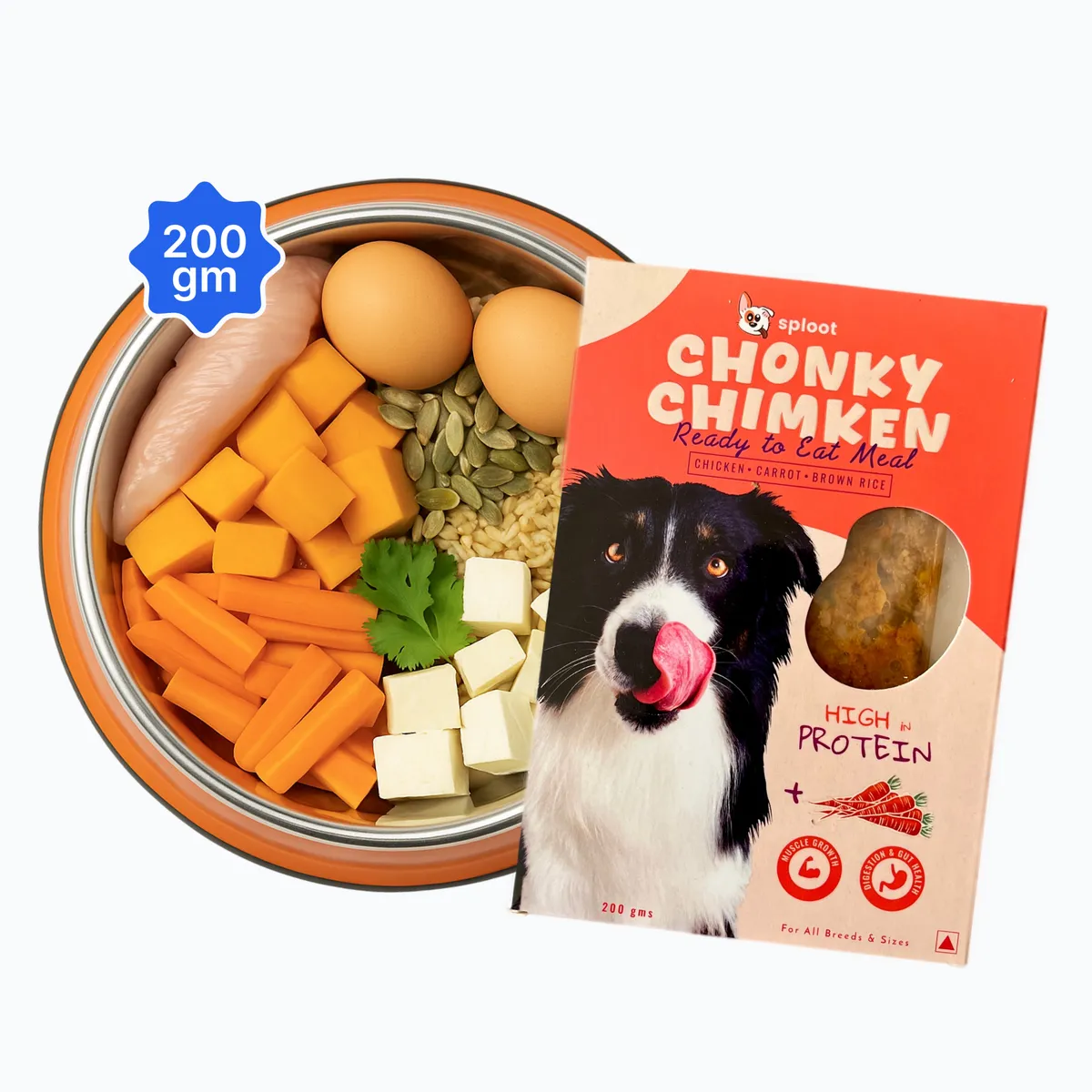
Chonky Chimken Dog Food
From ₹99
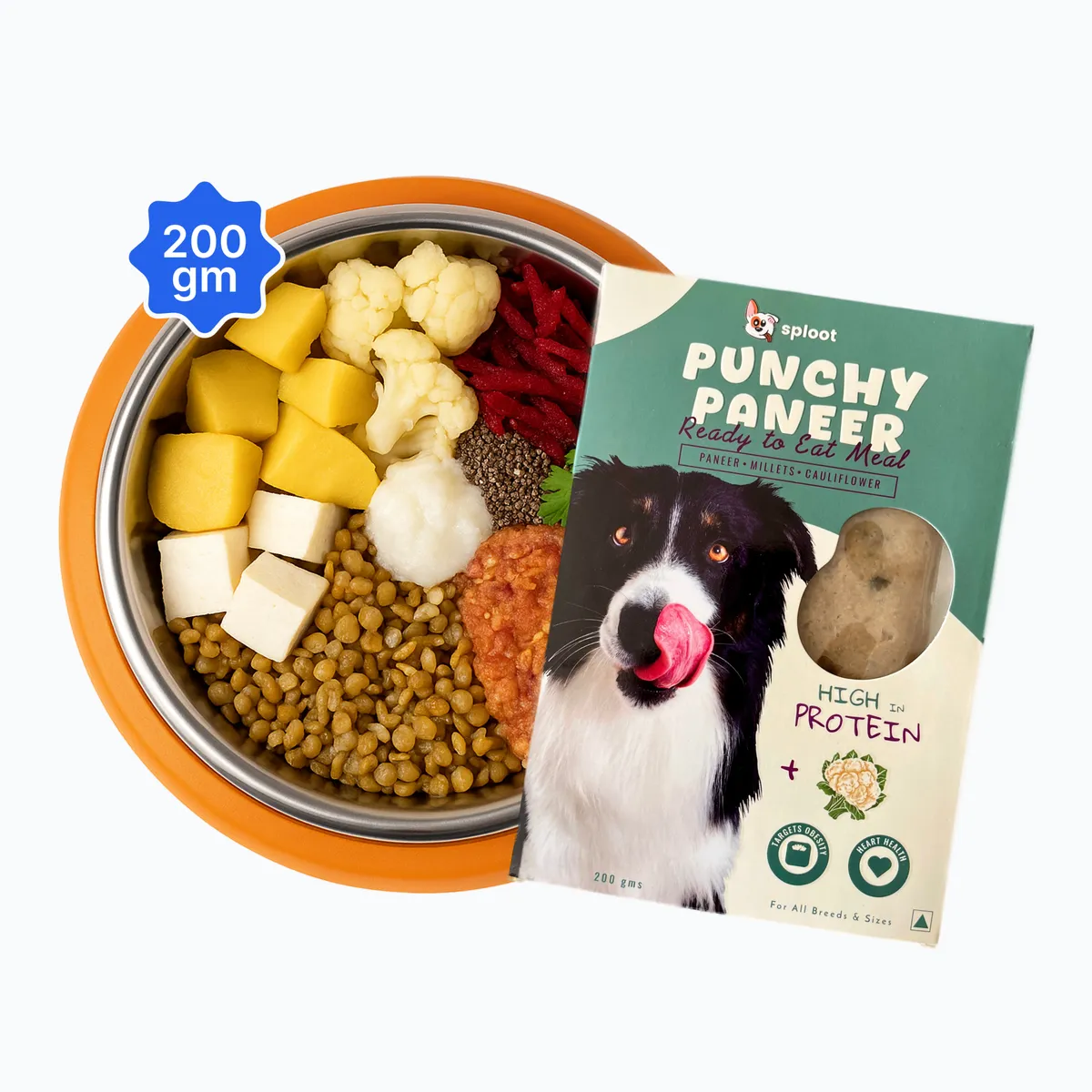
Punchy Paneer Dog Food
From ₹99
Crunchy dog biscuits are for a different job than training treats
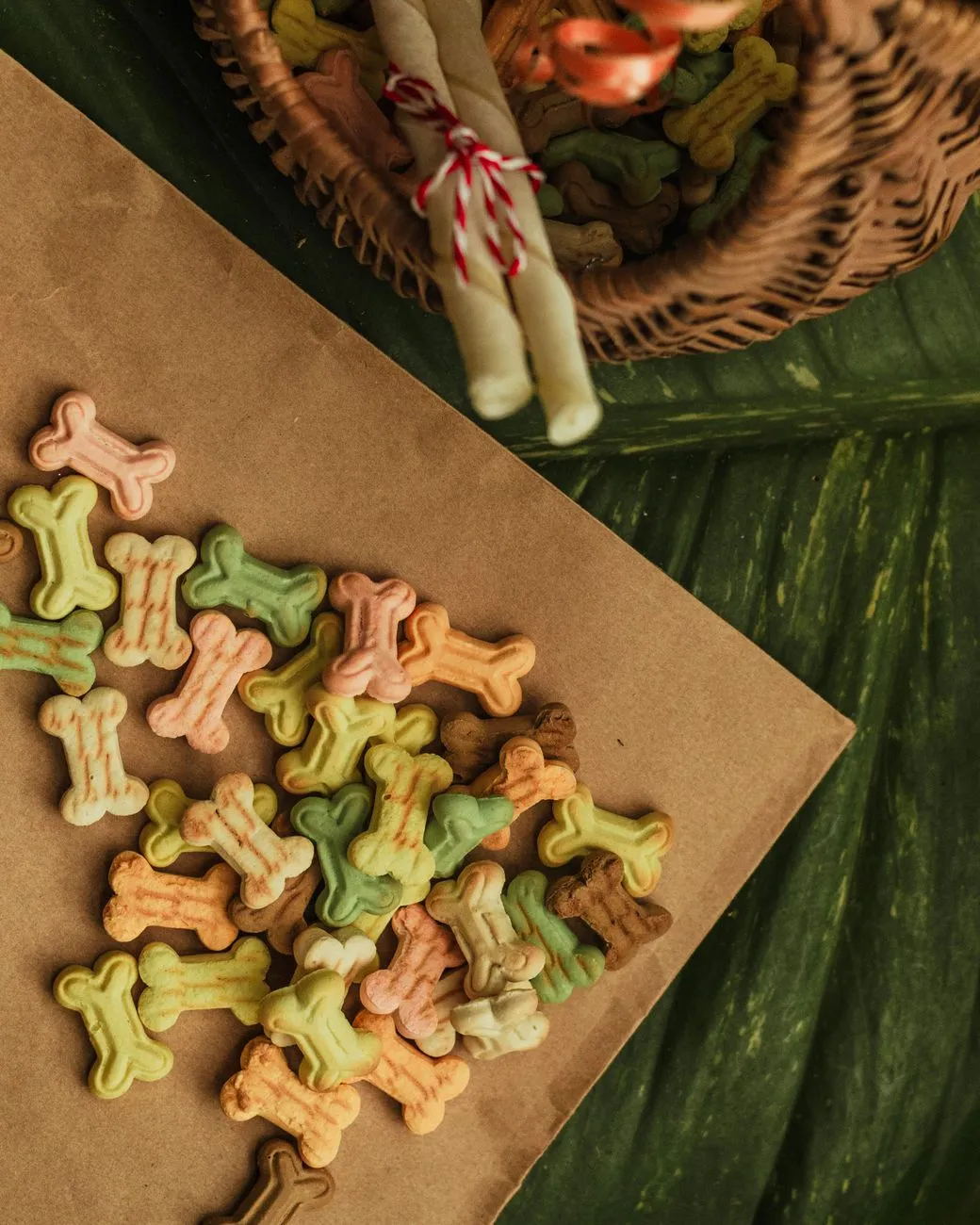
Dog biscuits — the bone-shaped crunchies most Indian pet shops stock by the kilo — are dog treats, but they are poor dog treats for training. Higher calories, slower to eat, and often loaded with fillers that add volume without adding nutrition.
Biscuits work better as occasional rewards, light dental scraping, or the treat you leave when you head out. They are not built for forty reps of "stay" on a hot Bangalore pavement.
Many biscuit packs say "training treats" on the front. Read the size and calorie line on the back. If one biscuit equals five training crumbs, your pouch math is off.
Healthy dog treats in biscuit form do exist — higher protein, limited ingredients, smaller formats. They still lose to soft bites for active training. Use biscuits when you want crunch. Use training treats when you want speed.
High-value treats win the hard moments — not every sit command
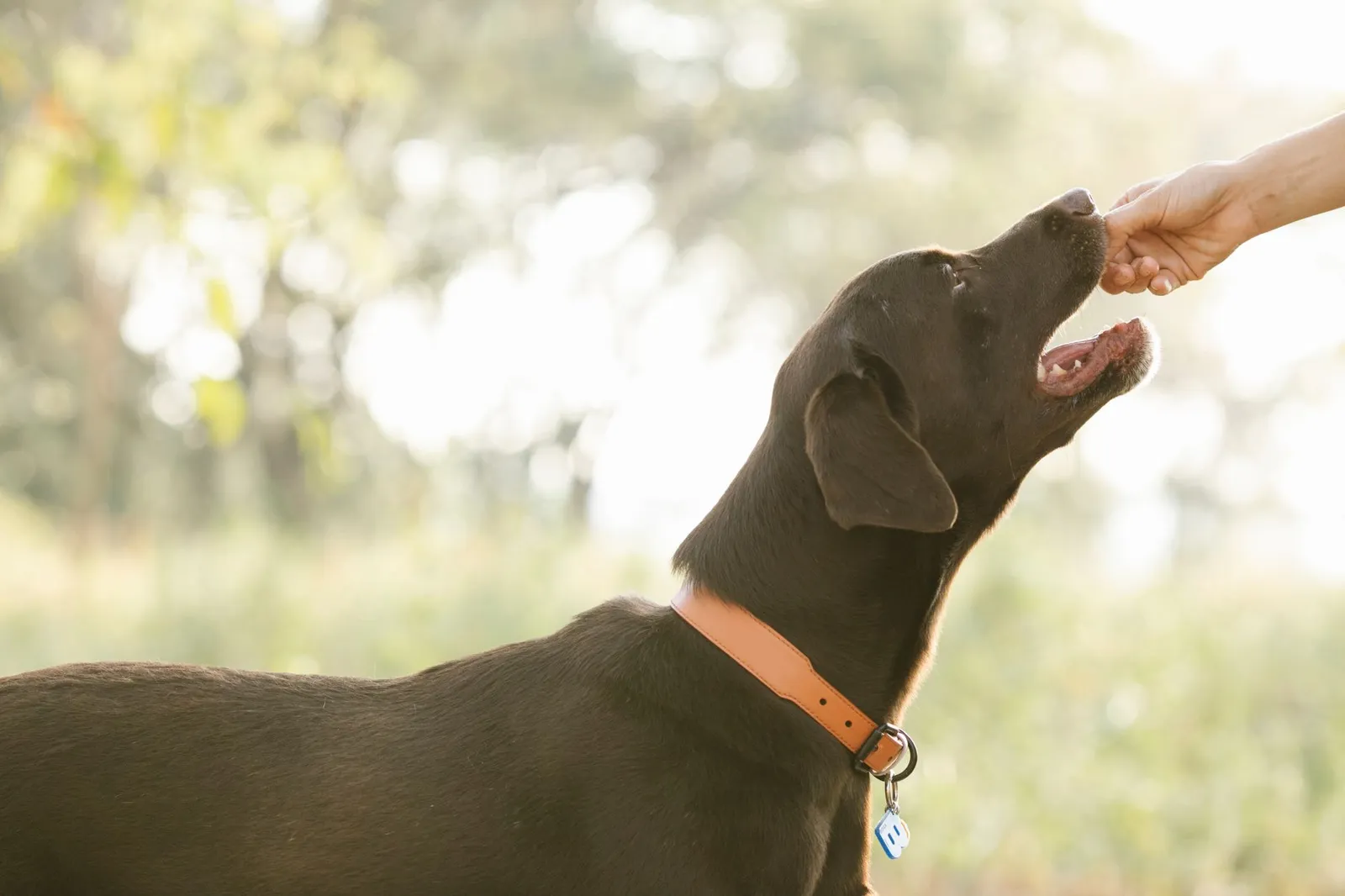
Not every reward needs to be jackpot-grade. Inside your living room, a piece of regular kibble or a mid-tier soft treat is often enough for a sit or a down. Outside, with squirrels, delivery bikes, and the neighbour's reactive indie — that is high-value territory.
High-value means whatever your dog finds irresistible right now. Boiled chicken, freeze-dried liver, a smear of plain peanut butter (xylitol-free), or a commercial soft treat they only see on hard days. The bar moves. What thrilled them last month may bore them today.
Save the best dog treats for the hardest wins: recall past another dog, vet lobby calm, fireworks night desensitisation. Using jackpot treats for every command dilutes them fast. Your dog learns that "sit" in the kitchen pays the same as "come" on a busy street. Then wonder why recall fails when it matters.
Variety helps. Rotate two or three training treats so boredom does not sabotage a good session.
Read the label before the cartoon chicken on the front
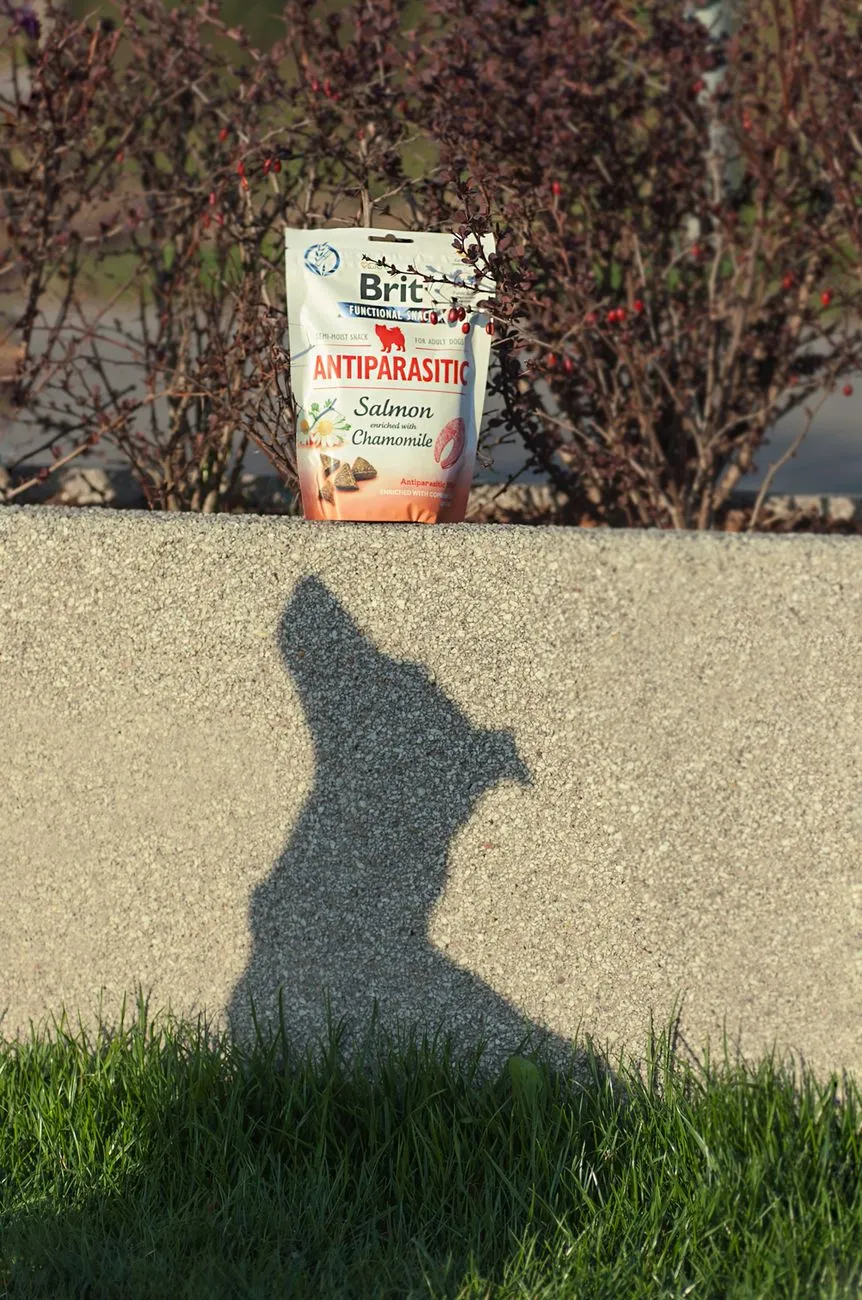
The cartoon animal on the front is marketing. The ingredient list is the brief.
Look for named protein first — chicken, fish, lamb — not vague "meat by-products." Single-ingredient or short lists beat paragraphs of fillers. Avoid artificial colours, added sugars, and preservatives like BHA or BHT when you have cleaner options on the shelf.
Treats labelled "supplementary" are not meals. That matters if you are tempted to replace breakfast with biscuits because the dog likes them more.
If you want label-reading habits that carry over to main food, our best dog food in India guide on Sploot walks through protein sources and life-stage labelling without turning the aisle into homework.
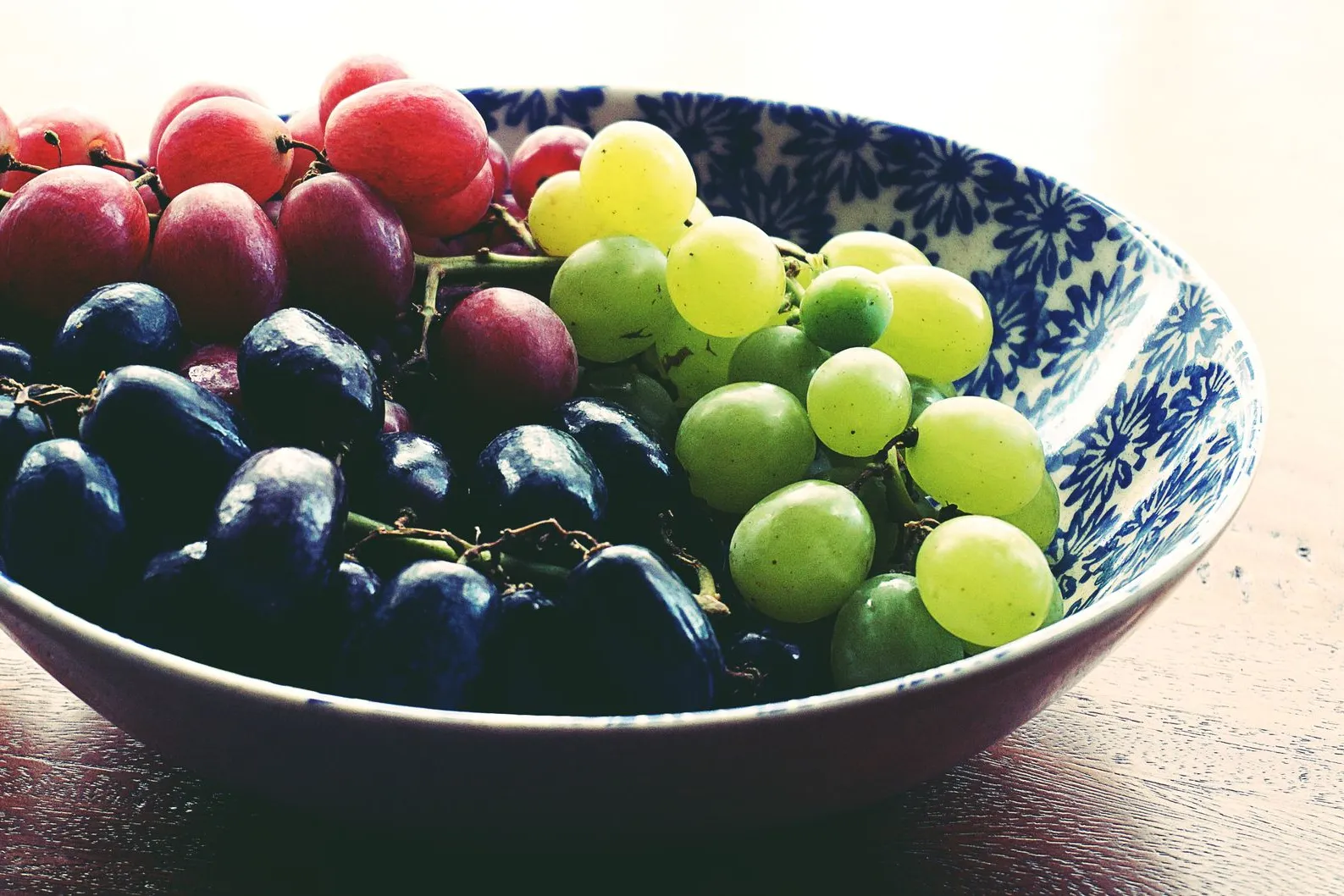
The AKC list of toxic foods for dogs is worth bookmarking before you experiment with human-food rewards. Onions, garlic, grapes, chocolate, and xylitol show up in Indian kitchens more often than people expect — especially in shared snacks and sugar-free products.
Human food treats add up faster than most of us track
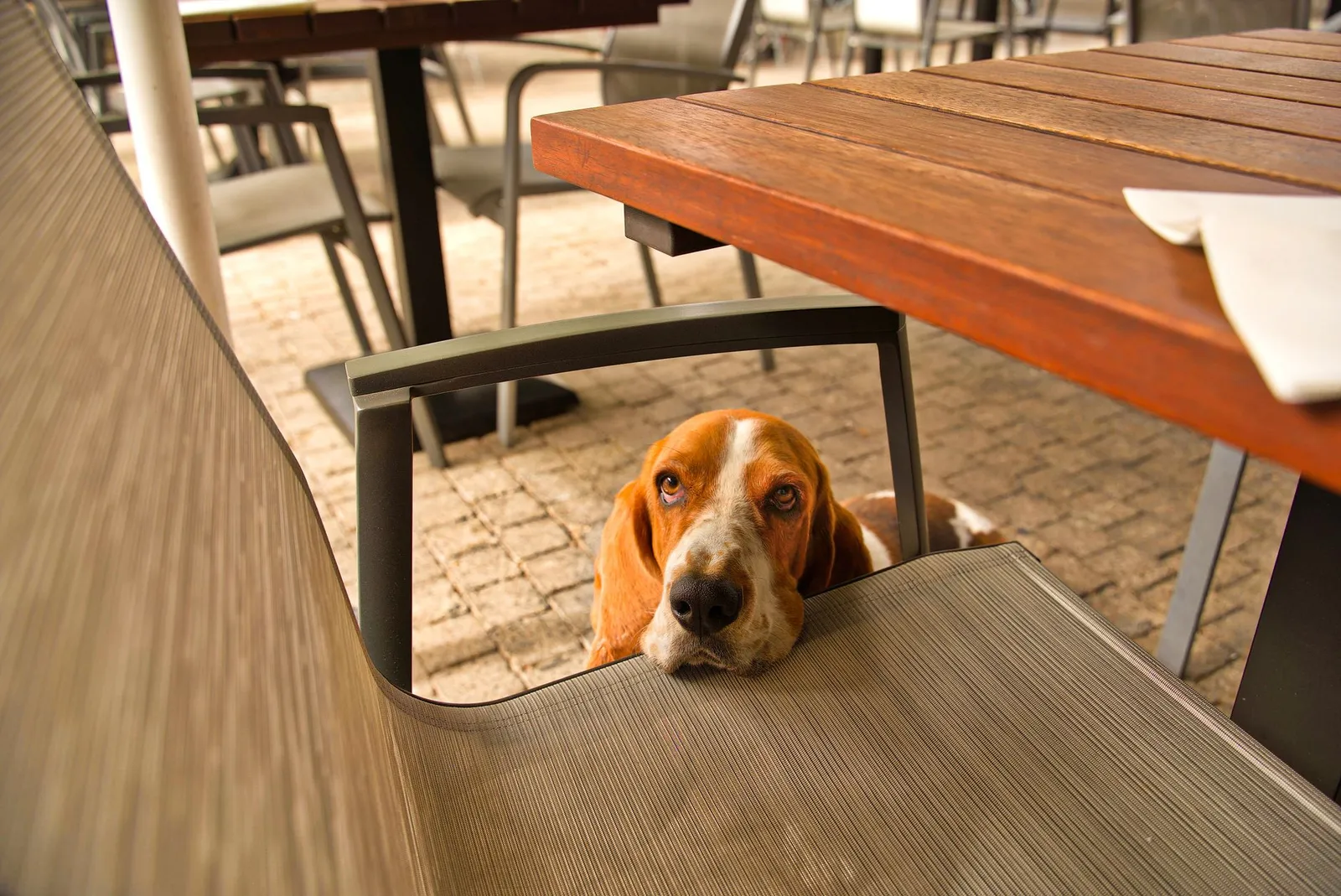
This is the opinion I will defend with a calculator: human food treats add up faster than people track. One paratha corner here, paneer cube there, leftover rice from lunch — it feels like love. Nutritionally it is often a carb-heavy, protein-light side channel that competes with the actual meal.
The dog is not broken when they hold out for table scraps. The treat math is. Random human snacks teach dogs to skip the bowl and wait for the dining table. Then you buy a more expensive kibble and wonder why they still refuse it.
Plain boiled chicken, unsalted eggs, and small pieces of carrot or apple can work as healthy dog treats in moderation. Seasoned, fried, salty, and sugary human food is where things go wrong — for calories and for ingredients.
If everyone in the household sneaks snacks, no label on the main food bag will fix picky eating. Agree on one treat budget per day and stick to it. Boring, but cheaper than a vet visit for pancreatitis after festival leftovers.
Dog treats in India — what I actually keep in the pouch

Best dog treats in India are less about one magic brand and more about what your dog will work for, stores reliably, and fits your budget. Pet shops and online shelves here mix imported training treats, Himalayan cheese chews, chicken biscuits, and local soft bites. Availability changes by city. Your dog's preference does not care about the import label.
What I look for on Indian shelves: small soft training treats for daily sessions, one crunchy biscuit-style option for occasional use, and a single high-value backup for outdoor recall. Price per use matters more than price per packet. A ₹600 bag of pea-sized soft treats often lasts longer than a ₹200 kilo of oversized biscuits because you actually break them small enough.
For puppies, match treat size to jaw size. A feeding chart for puppies on Sploot helps you see how little room there is for extras when the main diet is still being established.
Heat and humidity matter here. Open biscuit jars go stale. Soft treats can mould if the pouch stays half-sealed in monsoon. Buy what you will finish in a few weeks, not what looks like a bulk bargain for a single dog.
Vegetarian households sometimes ask about veg dog treats. Many biscuit lines are egg- or chicken-based even when they look neutral. If you need plant-forward options for ethical reasons, check our veg dog food in India guide for complete-meal context — treat labels need the same scrutiny.
Sploot meals are dinner, not pocket rewards
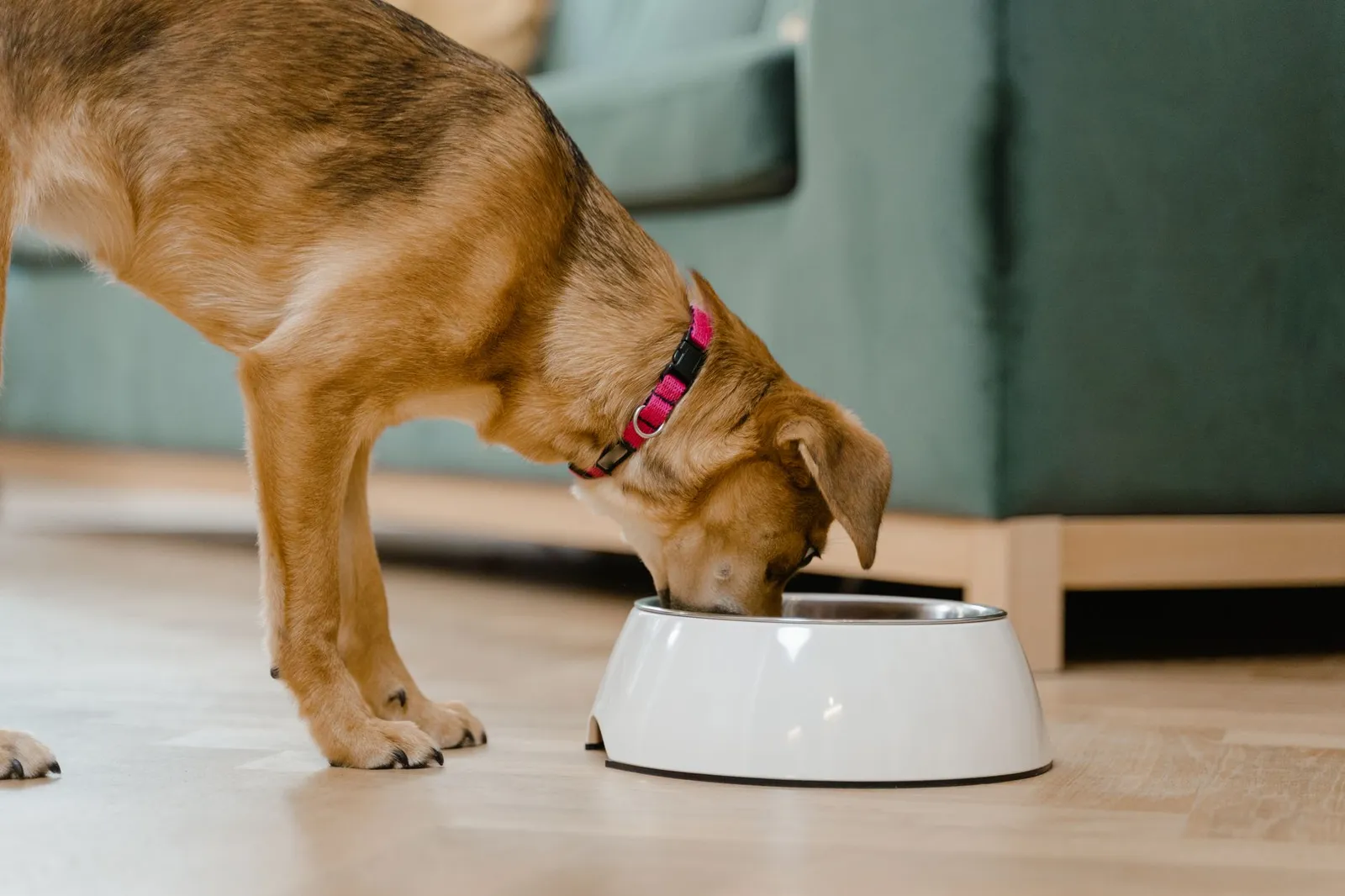
Sploot is not the right answer for every treat question — and I would rather say that upfront than sell you the wrong tool.
Our ready-to-eat meals — Chonky Chicken from ₹99 for a single 100 g trial pack, Meaty Mutton from ₹119 — are formulated as everyday complete food, not training crumbs. They are too calorie-dense and too portion-sized for forty rewards in a ten-minute session. Use them for meals. Use proper dog training treats for the pouch.
Where Sploot does fit: dogs who refuse kibble but need balanced nutrition, pet parents who stopped trusting home-cooked maths, and households that want the main 90% handled before they think about treats. Our dog Sriracha has eaten Sploot meals most days since she was about a year old. That is the bar we hold recipes to before we sell them.
If your issue is weight gain, chronic itching, or two days of not eating, that is vet first — not a treat swap and not a meal subscription. Sploot does food and doorstep care. We are not a clinic.
The WSAVA global nutrition guidelines explain what "complete and balanced" means for the main diet — useful context when you are deciding how much room is left for treats at all.
Straight answers
How many dog treats can I give my dog per day?
There is no single number — it depends on size, activity, and what food they already ate. The 10% calorie rule is the honest ceiling. A small dog might get a few pea-sized training treats. A large active dog has more room. Count extras, including biscuits and table scraps, not just what came out of the labelled treat bag.
What are the best dog treats for training?
Small, soft, smelly, and low-calorie. Pea-sized pieces you can deliver fast. Freeze-dried meat, soft commercial training treats, or plain boiled chicken work for most dogs. Crunchy biscuits are too slow for rapid reps. Save high-value options for outdoor or high-distraction work.
Are dog biscuits the same as dog treats?
All biscuits are treats. Not all treats are good for training. Biscuits are usually crunchier, larger, and higher in calories per reward. Fine for occasional snacks. Poor fit for a twenty-rep training session unless you break them into crumbs.
Can dogs eat human biscuits or paratha as treats?
Plain human biscuits in tiny amounts are not the worst occasional slip. Paratha, fried snacks, seasoned food, and sweets are a bad habit — too much fat, salt, and carbs. They also train dogs to ignore their bowl. Stick to dog-safe plain foods in moderation and read the AKC toxic foods list before you share from the table.
What ingredients should I avoid in dog treats?
Artificial colours, added sugars, xylitol, onion, garlic, excessive salt, and vague meat by-products. Long preservative lists on a product that should be simple is a sign to put it back. If you cannot pronounce most of the list, treat it as a sometimes food, not a daily pouch staple.
Are expensive dog treats automatically healthier?
No. Price tracks brand, import duty, and packaging as much as quality. Read protein source, calories per treat, and ingredient count. A mid-price single-ingredient freeze-dried treat can beat a premium bag full of fillers.
Can puppies have dog treats?
Yes, from about eight weeks once they are on solid food — but keep pieces tiny and account for the calories in their puppy meal plan. Training treats help with socialisation and bite inhibition work. Avoid hard chews until adult teeth are in. Our feeding chart for puppies on Sploot shows how little extra room there is while they are growing.
When should I stop giving treats and see a vet?
Sudden weight gain, vomiting after snacks, refusal to eat main meals for more than a day, lethargy, or itchy skin that flares after certain treats. Those are vet calls, not treat-brand swaps. The VCA guide to dog treats and obesity is a useful read if you are trying to trim weight without losing training progress.
If your treat pouch is sorted but the main bowl still feels like guesswork, start with a balanced meal before you optimise crumbs. Trial packs on sploot.space let you test whether your dog actually eats the food before you commit to a subscription.
Your dog will work for a sock if you let them. Give them something safer, smaller, and counted instead.
FREE GUIDE
Feed your dog right: the complete nutrition guide
Portions, fresh food, treats and what to avoid. Everything about your dog's diet in one free guide.
Read More
Everything your dog needs, in one app.
Track sessions in real time, receive updates, manage bookings, shop essentials and stay connected to your dog's care journey—all from the Sploot app.