
In this post: coat not breed — six brush types — match your dog — line brushing — comb test — dry coat and seasons — bath brush vs daily brush — when to book — straight answers
Dog Grooming Brush Guide: Pick by Coat, Not Breed
Pick the right dog grooming brush for your coat type — slicker, curry, rake, or comb. Technique, frequency, and when to book a pro.

3 Jul 2026 · 7 min read
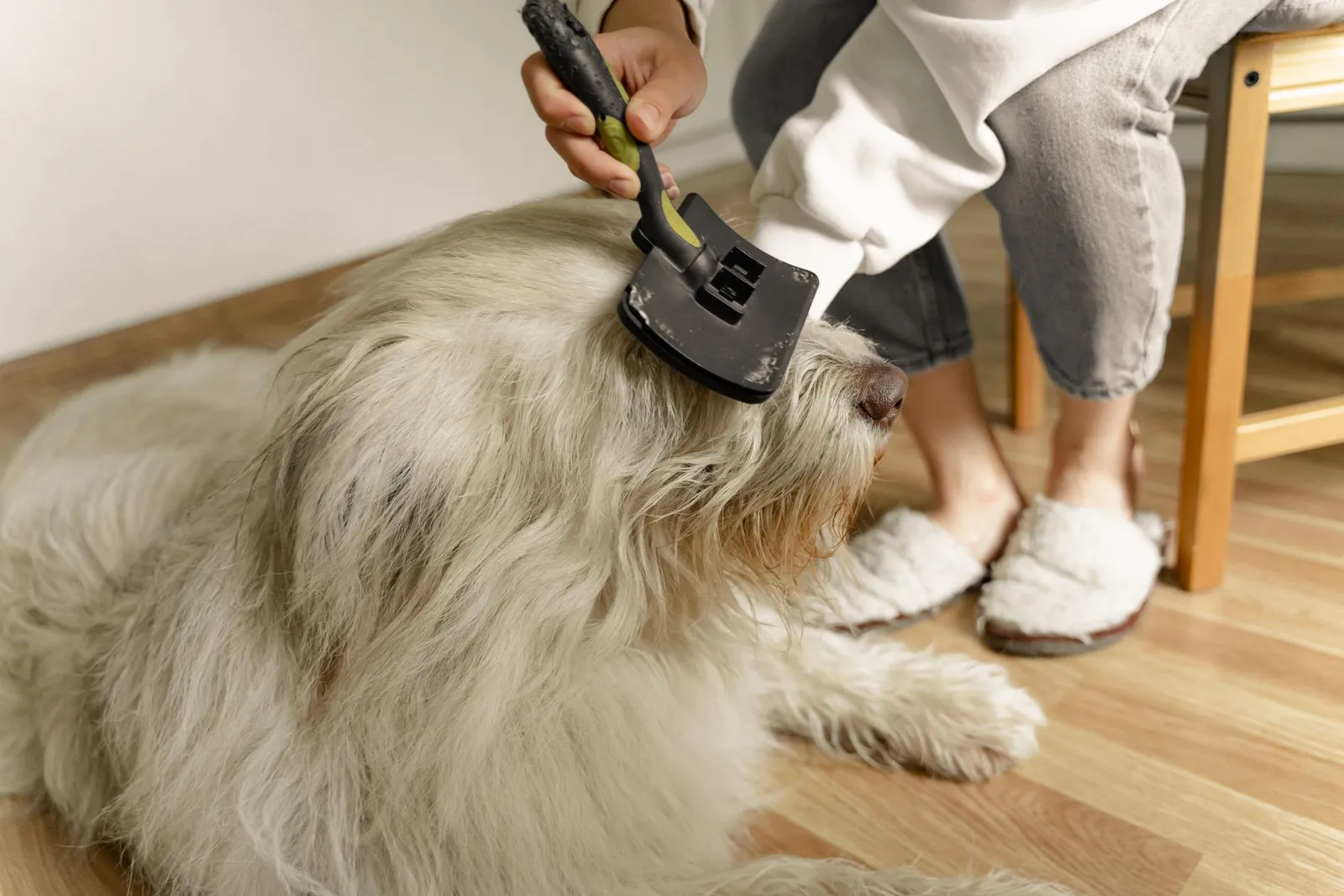
I know the wool-farm feeling after three skipped brush sessions — your dog is not doing it on purpose, but the sofa tells a different story. Straight answer: the right dog grooming brush is the one that matches your dog's coat type today, not the breed printed on the packaging. For most Indian homes that means one primary brush, one metal comb to verify your work, and a brushing routine you can actually keep between professional visits.
This post is about brushes and technique — not the full kit shopping list or the bath-day sequence. Our dog grooming kit post covers what else to buy. Our how to groom a dog walkthrough covers the full session order. Here I stay on which tool touches the coat, how, and how often.
The right dog grooming brush depends on coat type, not the breed on the bag
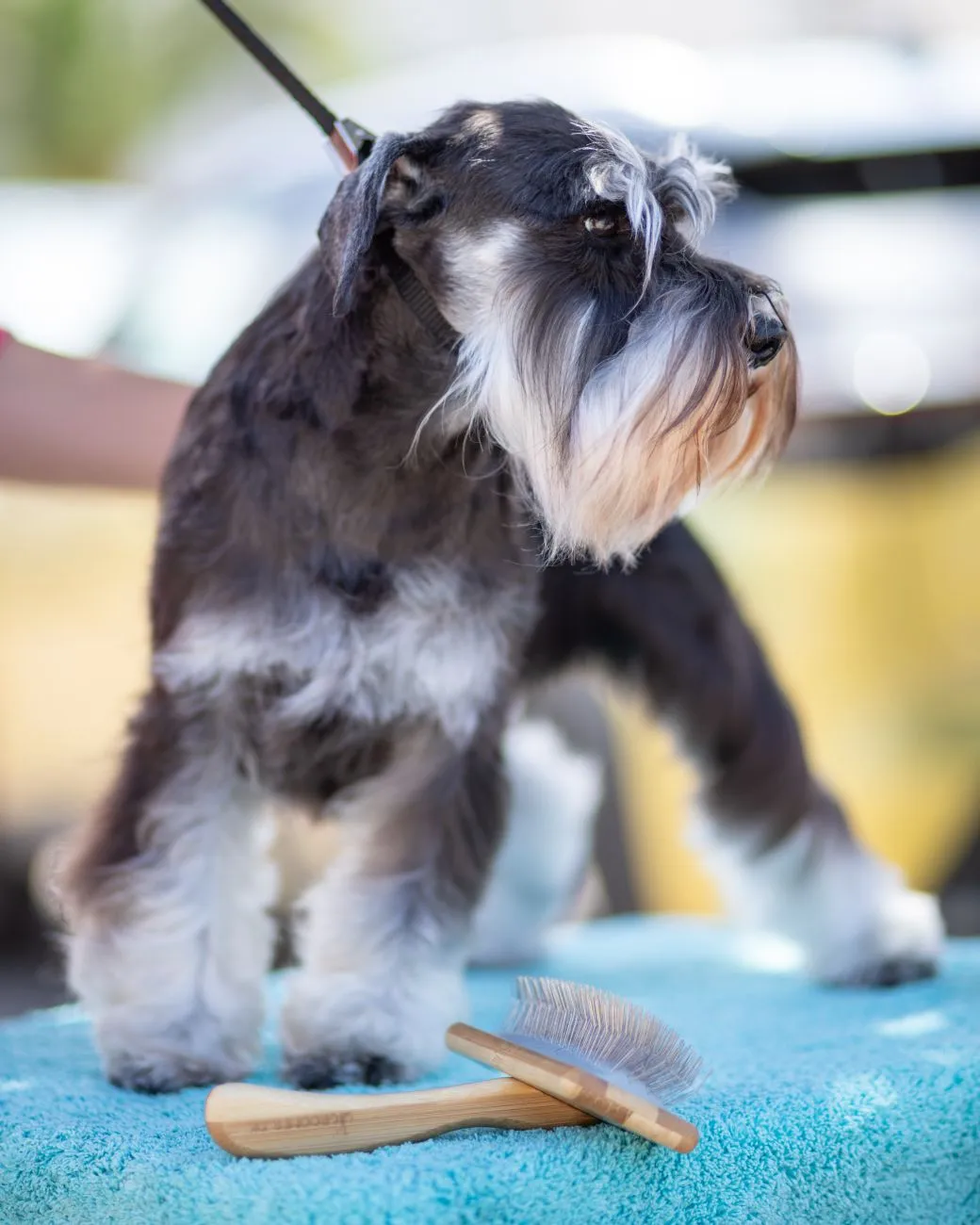
Walk into any pet store and every dog grooming brush claims it suits Golden Retrievers, Huskies, and indies in the same breath. That is marketing, not anatomy. A short-coated indie in Bangalore and a double-coated Golden in Delhi need different tools even if both sleep on the same sofa brand.
Coat type beats breed label every time. Ask three questions before you buy: does the fur shed in clumps or lie flat, does it grow continuously or to a fixed length, and can you part it to see skin without forcing it. Your answers point to slicker, curry, rake, or comb — not to whatever photo is on the box.
If you already own a pet grooming brush that feels wrong — too harsh, no fur coming out, or the dog flinching — you probably bought for breed, not coat. Return it and restart with the sections below.
Six brush types — and what each one is actually for
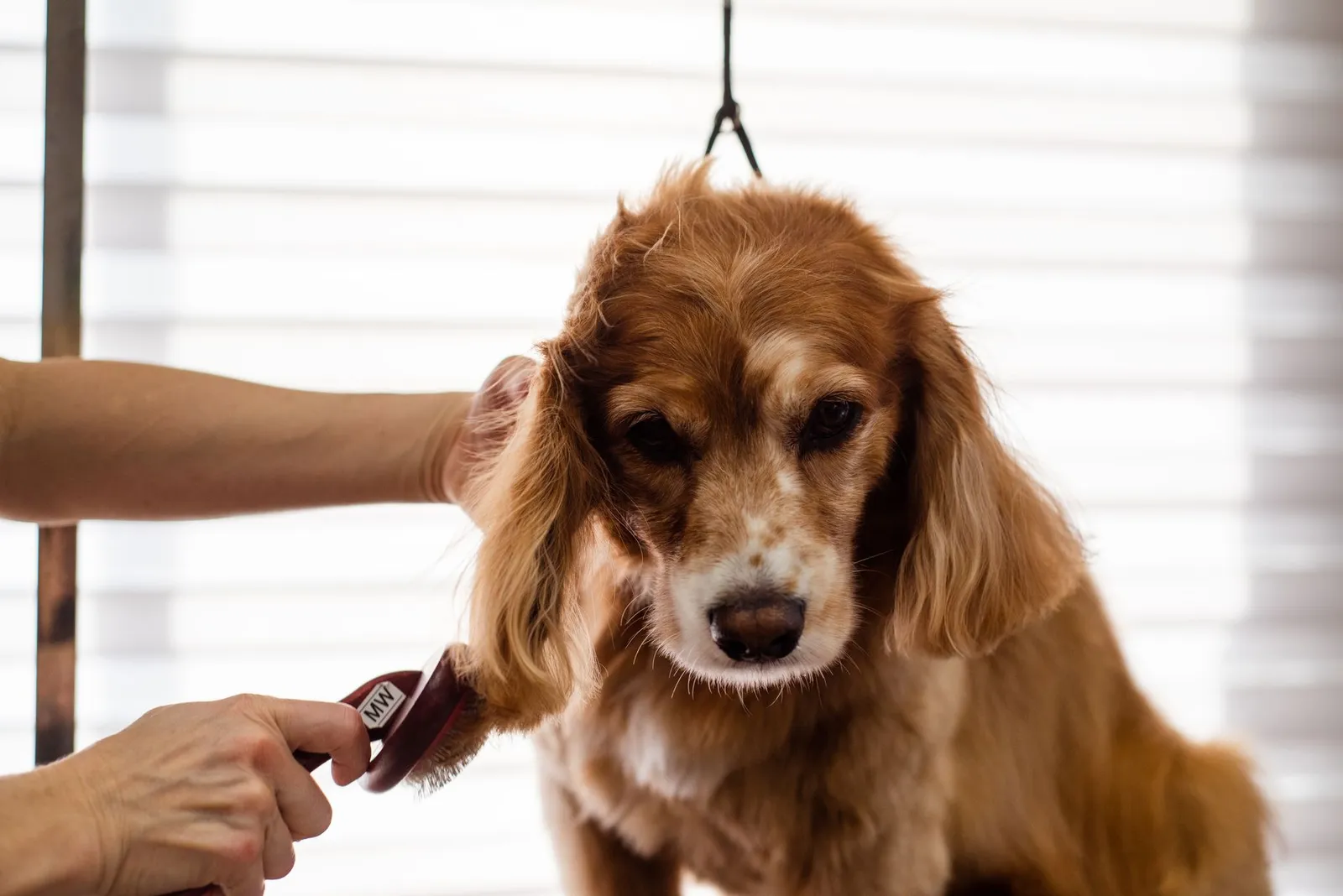
Most dog parents need one or two of these, not all six. The American Kennel Club brush guide groups tools by function — here is the home version.
Rubber curry or bristle brush — short smooth coats. Loosens dead hair and spreads skin oils.
Slicker brush — medium, long, curly, and wavy coats. Fine pins detangle and prevent mats. Light pressure only. The workhorse pet grooming brush for mat-prone coats.
Pin brush — long straight silky coats. Gentler finishing passes.
Undercoat rake — double coats in shed season. Fifteen minutes max per session on the same spot.
Dematting comb — small tangles only. Not a substitute for skipped brushing.
Metal comb — verification tool for every coat. If it snags, the brush has not finished.
Recommended products

Chonky Chimken Dog Food
From ₹99

Punchy Paneer Dog Food
From ₹99
Match the brush to the coat on your sofa today
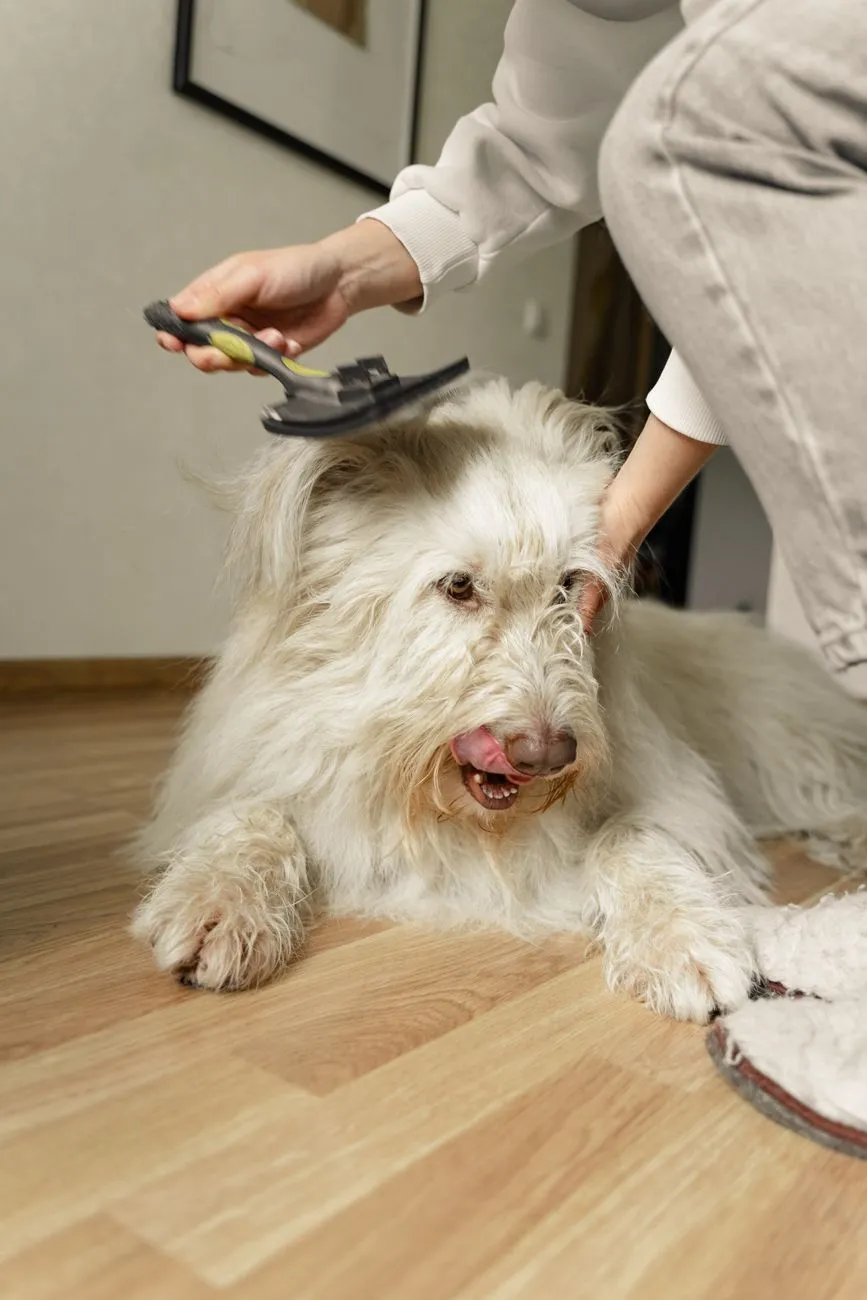
Short smooth coat — indie, Beagle, Boxer, most apartment dogs: rubber curry or soft bristle brush. Weekly is often enough unless shedding spikes. A dog brush with long metal pins will scratch skin you can see through the coat.
Double coat — Golden Retriever, Husky, German Shepherd, thick indie mix: slicker plus undercoat rake in shed season, metal comb always. Brush twice a week minimum; daily during the spring coat blow.
Long or drop coat — Shih Tzu, Lhasa, Maltese, Afghan: slicker and comb, often daily on friction zones — collar line, armpits, behind ears. These coats mat in days, not weeks.
Curly or wool coat — Poodle crosses, Bichon types: long-pin slicker, comb, detangling spray on dry coat if needed. Never skip the comb test.
Wire or harsh coat — some Terriers: slicker for maintenance; stripping is pro territory unless you show.
When in doubt, buy the gentler tool first. You can always add a rake later. You cannot un-scratch irritated skin.
Our dog grooming tips post covers frequency by coat in one place if you want a schedule to pin on the fridge.
Line brushing reaches the skin — surface strokes do not count
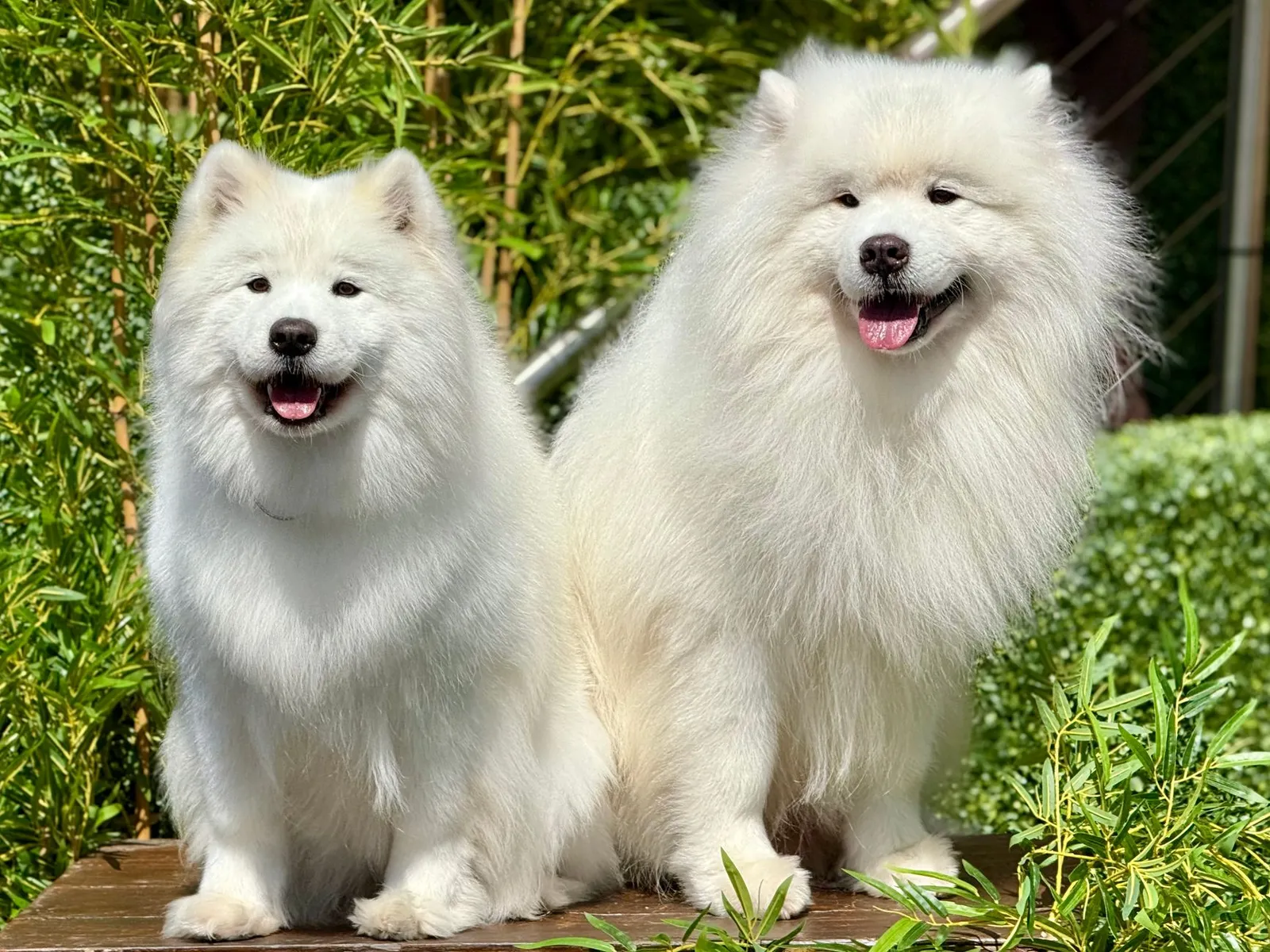
The biggest brushing mistake I see: long strokes over the topcoat while mats form against the skin. Surface brushing feels productive. It is not.
Line brushing fixes that. Part the coat with your free hand — lift a section like a page of hair — and brush from skin to tip in that strip only. Move along the body in sections: neck, shoulder, rib, hip, tail. Behind ears and under armpits first. Those zones mat fastest.
Pressure stays light on slicker pins. You are teasing tangles, not scraping. If the dog stiffens or turns to bite the brush, stop. Short session tomorrow beats a fight today.
For short coats, line brushing is less critical — a curry pass over the whole body works. For anything that mats, line brushing is the difference between maintenance and a dematting bill.
The comb test tells you whether the brush did its job
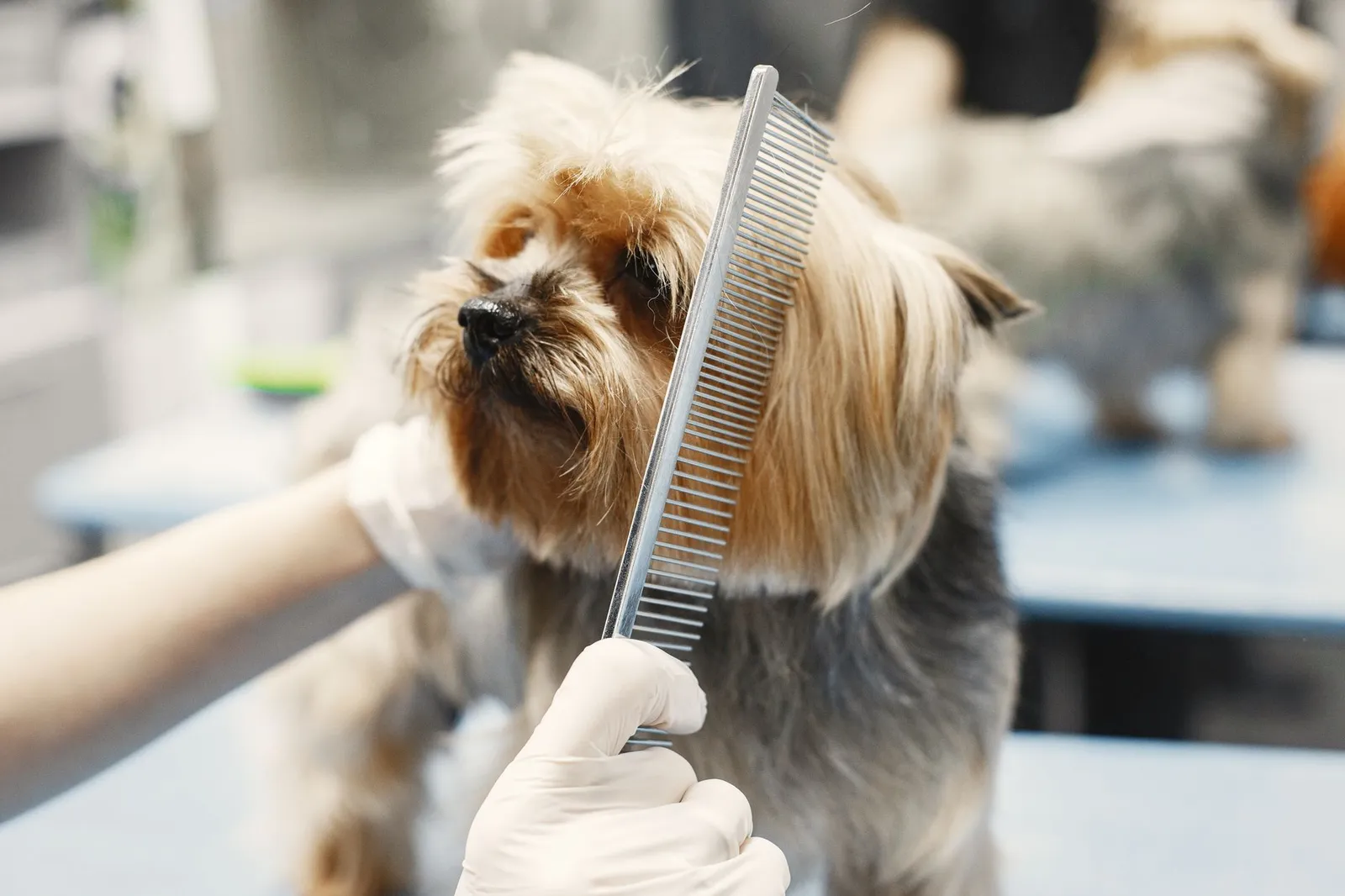
Every brushing session ends with a metal dog grooming comb — not optional, not tomorrow.
Run the comb from root to tip in the same sections you brushed. Snag-free pass means you are done. Snag means back to the slicker in that strip only. Repeat until the comb glides.
This takes ninety seconds once you know the pattern. It saves the dematting appointment you did not plan for. Mats hide under fluffy topcoat — the comb finds what your eyes miss from the couch.
If the comb stops dead and will not move without force, do not pull harder. That is book-a-groomer territory, not hero-brush territory.
Brush dry, and step up the schedule when shedding season hits
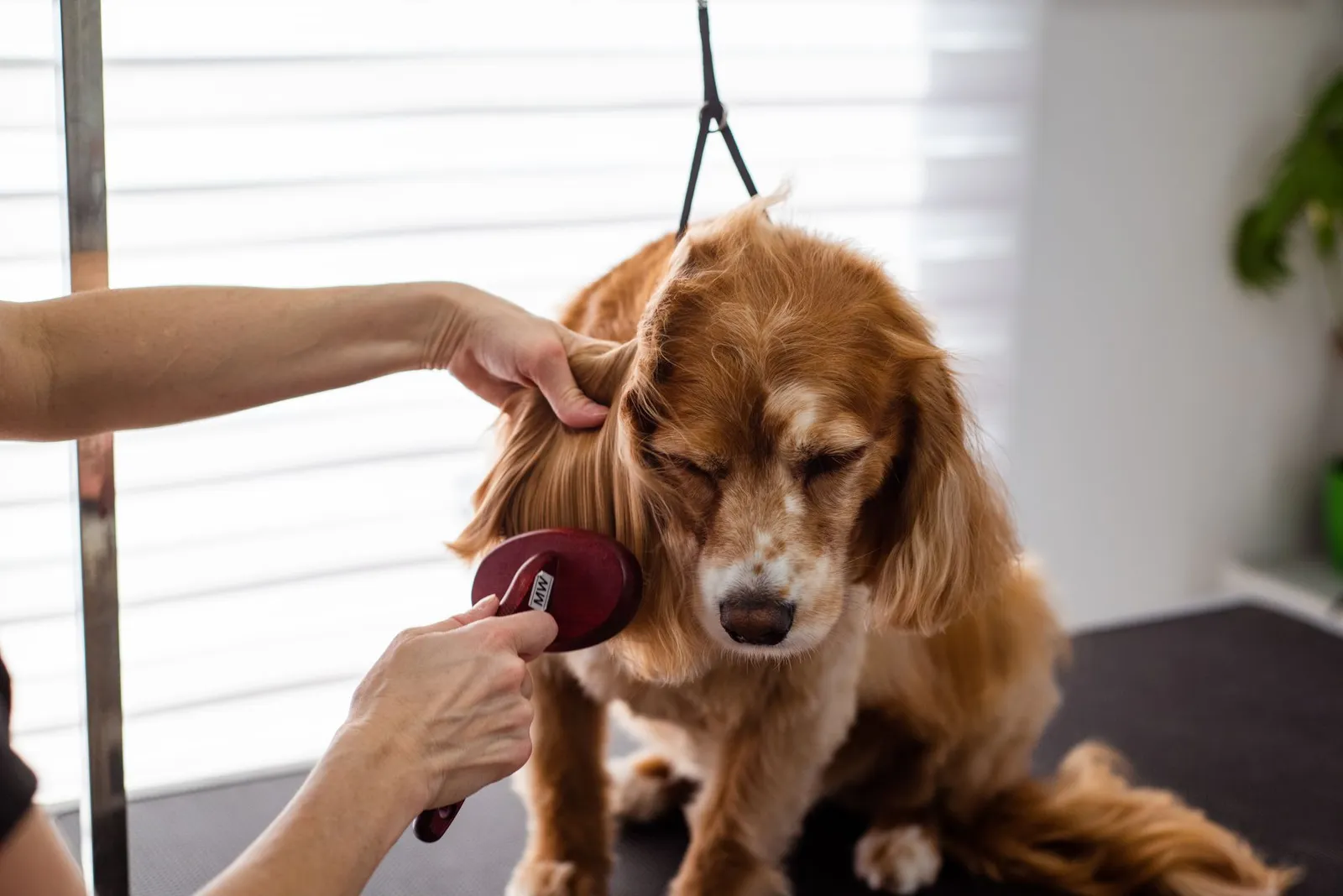
Rule of thumb: brush dry fur. Wet hair stretches, breaks, and mats tighter. Dry brush first, always — even on bath day. Our how to groom a dog post puts brush-before-bath as step one for a reason.
Frequency by coat: short coats weekly or after muddy walks. Double coats twice a week, daily in heavy shed. Long coats daily on friction zones, full body every two to three days.
Indian seasons change the calendar. Pre-monsoon and post-winter are blow-coat season — brush more. Monsoon: dry the coat fully after walks before brushing. Summer: shorter sessions, morning or evening. Pet care here has to adapt to apartment life and weather, not copy advice written for suburban America.
A dog bath brush is a different tool from your daily brush
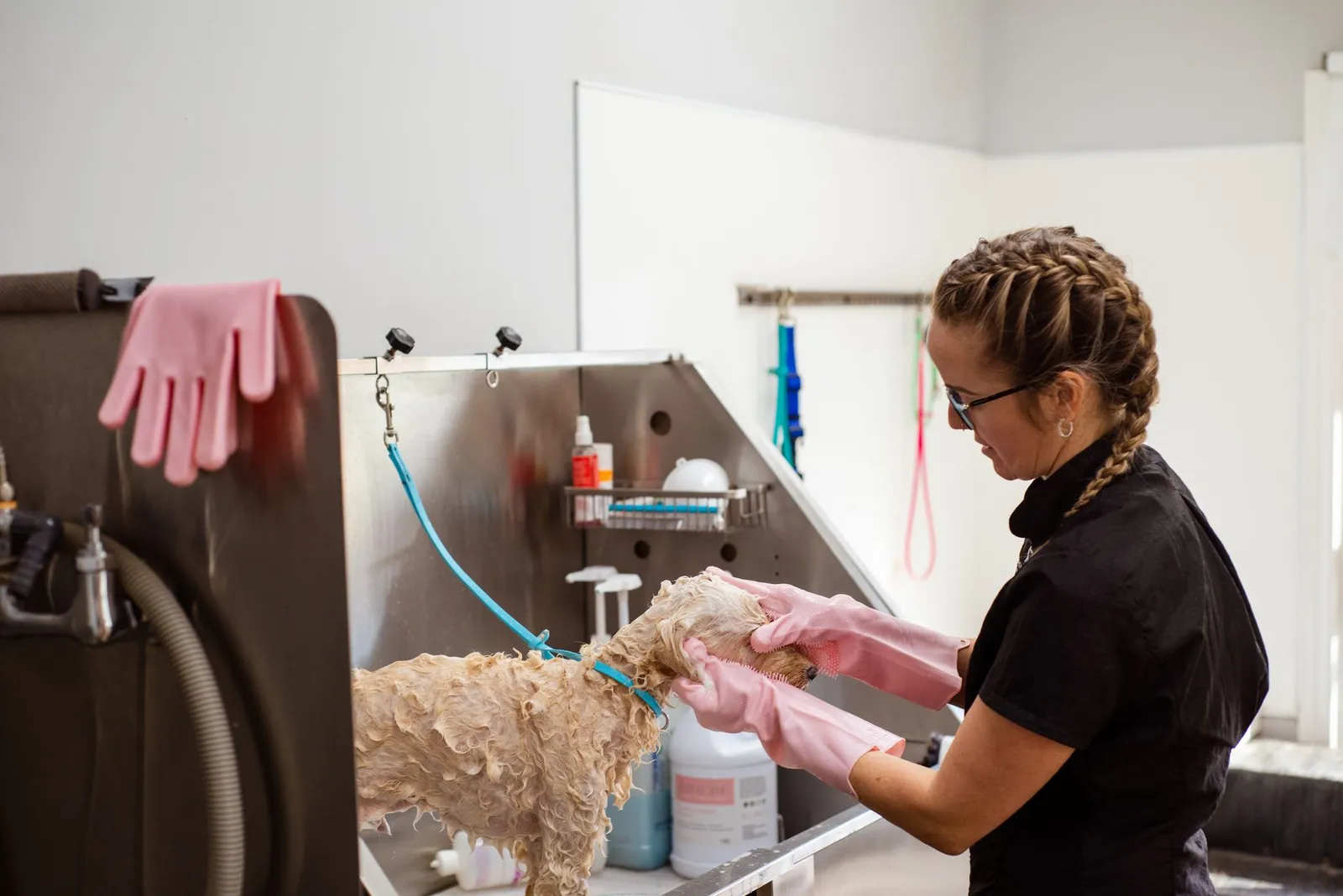
A dog bath brush — usually a rubber curry with wider knobs — works on wet soapy coat to lift dirt and loose hair during shampoo. It is not your daily detangling brush.
Use it in the tub after lather, rinse it clean, and hang it dry. Do not store it damp in monsoon humidity or it grows the kind of smell you cannot shampoo away.
Short coats benefit most. Long or double coats still need dry line brushing before and after bath day. The bath brush is an assist, not the whole routine. Full bath setup and rinse rules live in our dog bath guide.
The AVMA on grooming and health notes that regular coat care supports skin health — brushing and bathing play different roles, and the tools should too.
When brushing stops working — book before dematting wins
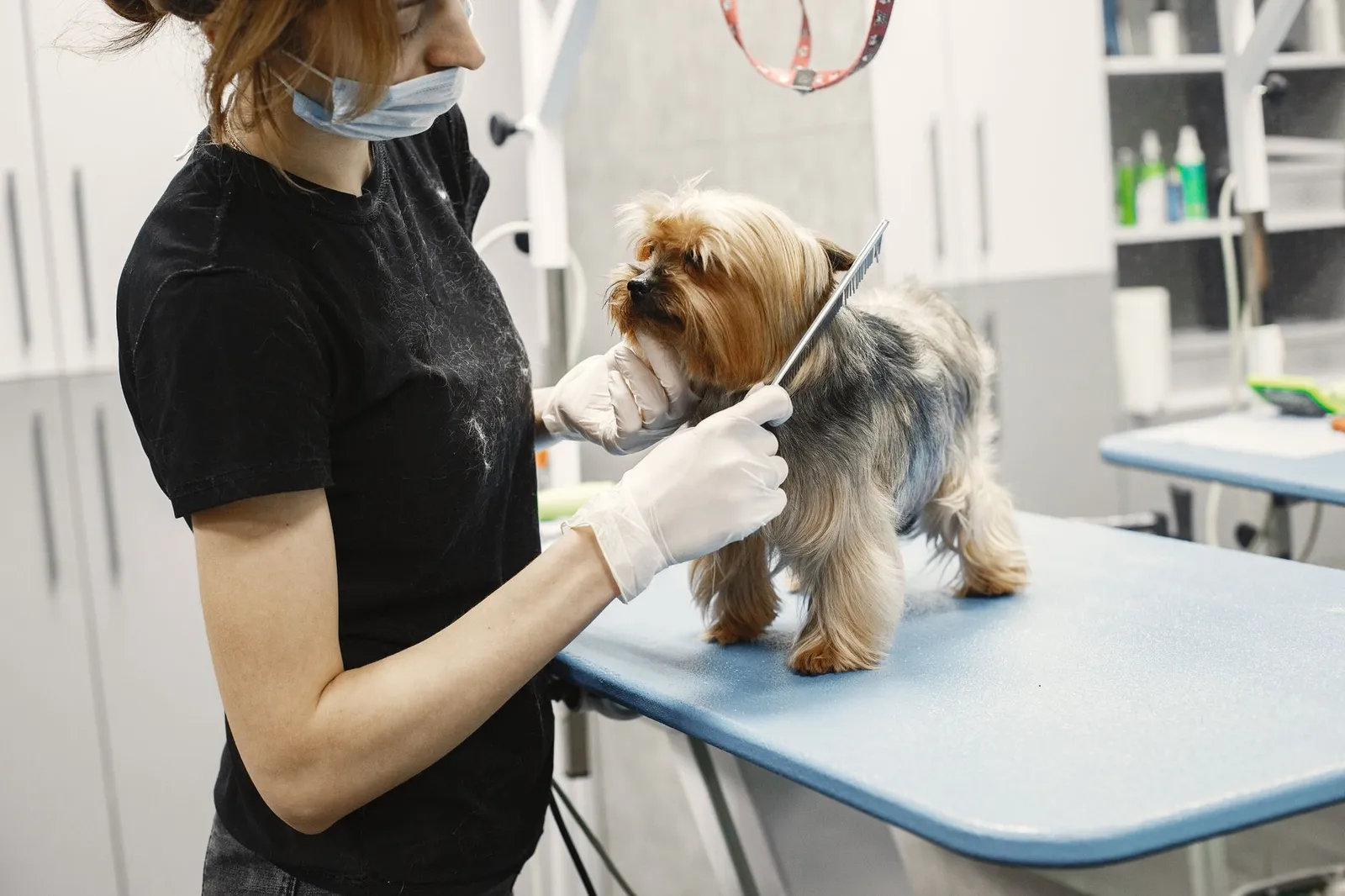
Honestly, brush twice a week before you need a groomer. Most matting is a maintenance problem, not an emergency. When brushing loses the argument for three weeks straight, dematting runs ₹1,598 on average nationally — and that is before you count the stress on a dog whose coat is already tight to skin.
Book a professional when: the comb will not pass and mats sit on skin; your dog fights every session and trust is breaking down; you need undercoat removal beyond what fifteen minutes of rake work can safely do; or you smell skin issues under the tangles — vet first on redness or discharge, then groomer.
Fair call on when not to book Sploot: a five-minute curry pass on a calm short-coated dog who just rolled in dust — do that yourself. You do not need a ₹999 bath because the sofa survived.
When you do book, a home visit keeps the dog in familiar smells. Sploot session reviews average 4.78 stars across 3,361 reviews. Bath and Blow Dry runs ₹999 on average; quarterly Bath plans drop to ₹1,371 per session at the best price. Our pet grooming at home guide covers the DIY versus pro split. If the comb test keeps failing after an honest week of brushing, I would book rather than force it — that is what sploot.space is for.
Straight answers
What dog grooming brush is best?
The one matched to coat type: rubber curry or bristle for short smooth coats, slicker plus metal comb for long or curly coats, slicker plus undercoat rake for double coats during shed season. No single brush suits every dog.
How often should I brush my dog?
Short coats: weekly or after heavy dirt. Double coats: twice a week, daily in shed season. Long or mat-prone coats: daily on friction zones, full body every two to three days. Increase frequency when the comb starts snagging.
Can I brush my dog when the coat is wet?
No for detangling. Wet hair mats tighter and breaks. Dry brush before bath. A dog bath brush in the tub during shampoo is fine — that is a separate tool for cleaning, not dematting.
Slicker brush or pin brush — which do I need?
Slicker for detangling and mat prevention on medium, long, curly, and wavy coats. Pin brush for gentle finishing on long straight silky coats. Most Indian dog parents with mat-prone coats need a slicker first.
What is a dog bath brush used for?
A rubber curry used during bathing to work shampoo through and lift loose hair on wet coat. It does not replace dry brushing before and after bath day.
How do I brush a double-coated dog at home?
Dry coat only. Slicker first in sections, then undercoat rake in shed season — light passes, same spot no more than a few minutes. Finish with a metal comb root to tip. Never shave a double coat to skip brushing unless a vet directs it for medical reasons.
When should I book a groomer instead of brushing at home?
When mats touch skin, the comb will not pass without force, your dog fights handling, or you need coat work beyond maintenance. Skin redness or smell under mats — vet first.
Do indie dogs need a special brush?
Most indies have short to medium smooth coats. A rubber curry or soft bristle brush is usually enough. Thick-coated indie mixes need the double-coat routine — slicker, rake in season, comb always.

FREE GUIDE
Feed your dog right: the complete nutrition guide
Portions, fresh food, treats and what to avoid. Everything about your dog's diet in one free guide.
Read More
Everything your dog needs, in one app.
Track sessions in real time, receive updates, manage bookings, shop essentials and stay connected to your dog's care journey—all from the Sploot app.