
In this post: what a table is for — size and weight — foldable vs fixed — arm and non-slip safety — apartment setup — tools on the table — when not to buy — straight answers
Dog Grooming Table Guide: Size, Height and Safety at Home
Pick a dog grooming table by size, weight capacity, and arm safety for Indian apartments. Learn when DIY works — and when to book a pro on Sploot instead.

13 Jul 2026 · 6 min read
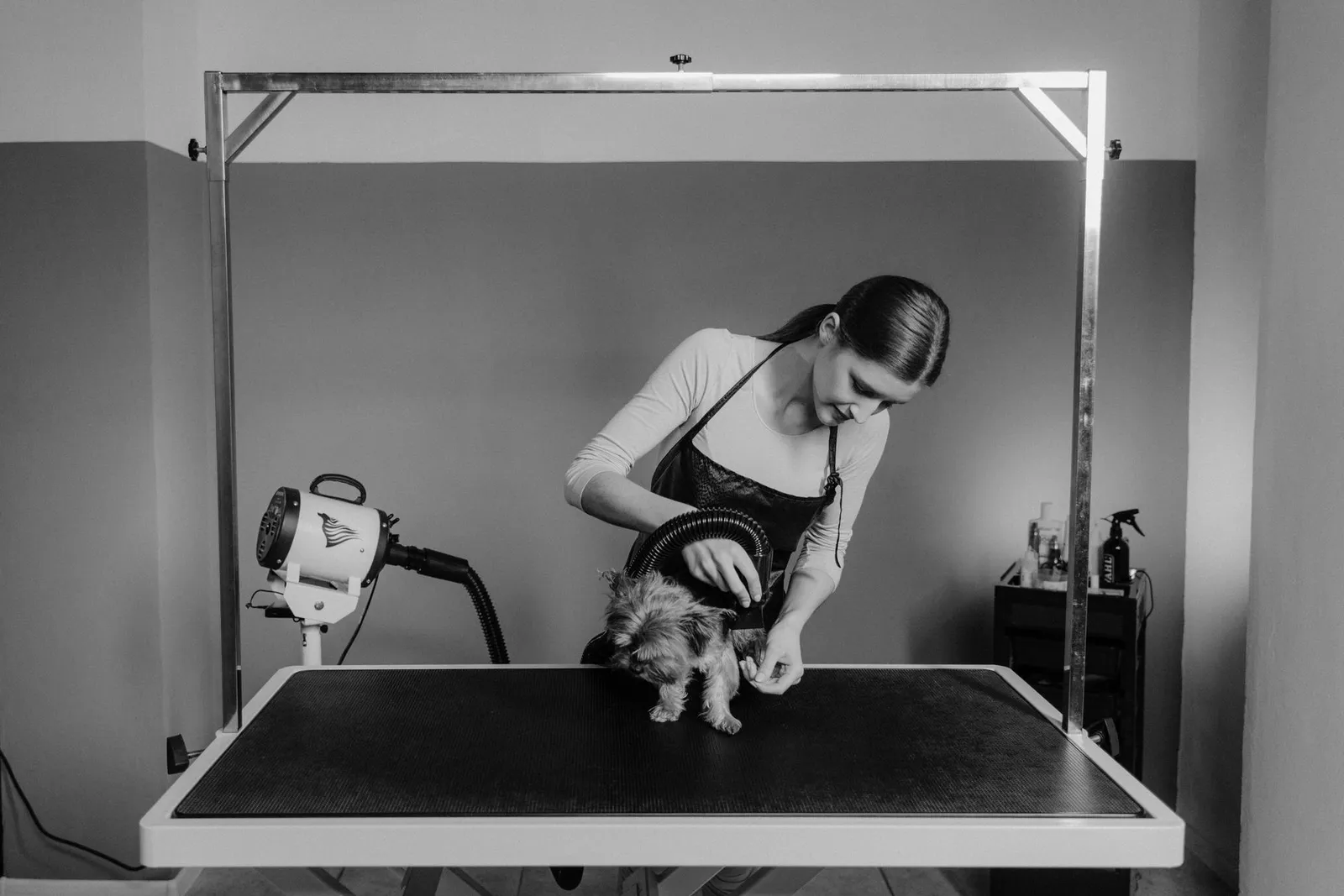
I have watched more dog parents groom on bathroom tiles than on anything resembling a workstation. Straight answer: a dog grooming table is a raised, non-slip platform with a grooming arm so you can brush, trim, and check nails at elbow height without kneeling on wet floors. It does not turn your 2BHK into a salon. It stops your back from doing the job your dog's coat needs twice a week.
If you already own brushes and still skip sessions because the floor hurts, the table is the missing piece. If your dog panics at height, or mats sit on skin, buy nothing — book a pro. This post stays on tables and home setup. Our dog grooming kit guide covers what tools to put beside it. Our pet grooming at home routine covers the session order.
A dog grooming table is a height and safety tool — not salon cosplay
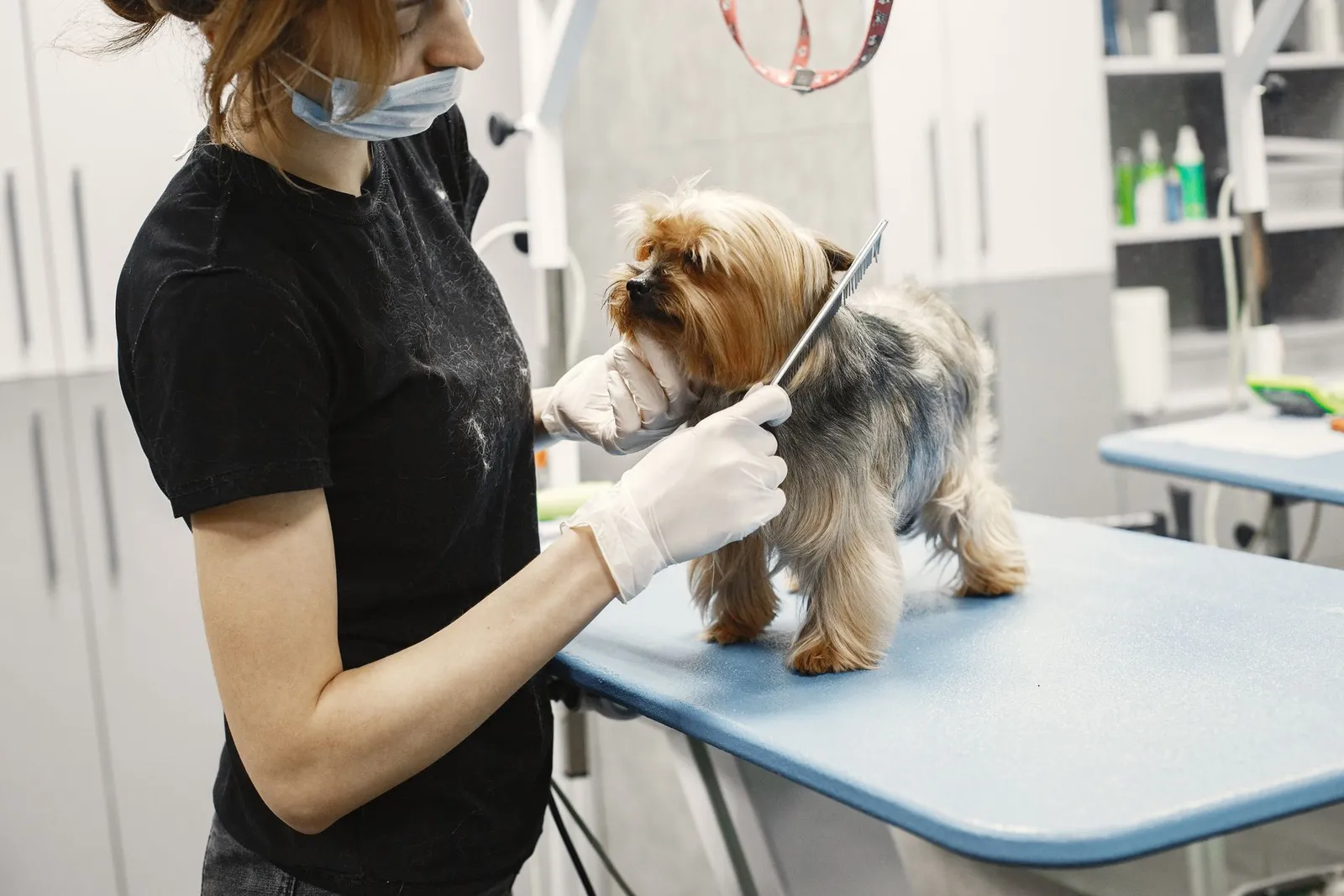
A dog grooming table does three jobs. It raises the dog so your shoulders stay level. It gives paws a grip that bathroom tiles do not. It holds a grooming arm and loop so a wriggling dog does not walk off the edge mid-brush.
That is it. You still need coat-matched brushes, dog shampoo, and time on the calendar. The table only removes the kneeling tax that makes Indian dog parents postpone maintenance until dematting becomes the only option.
Rule of thumb: if you brush twice a week already and the only complaint is your knees, a table earns its floor space. If you have not brushed in three weeks, a table will not fix the habit — it will just hold a matted dog higher off the ground.
Match table size and weight capacity to the dog on your sofa
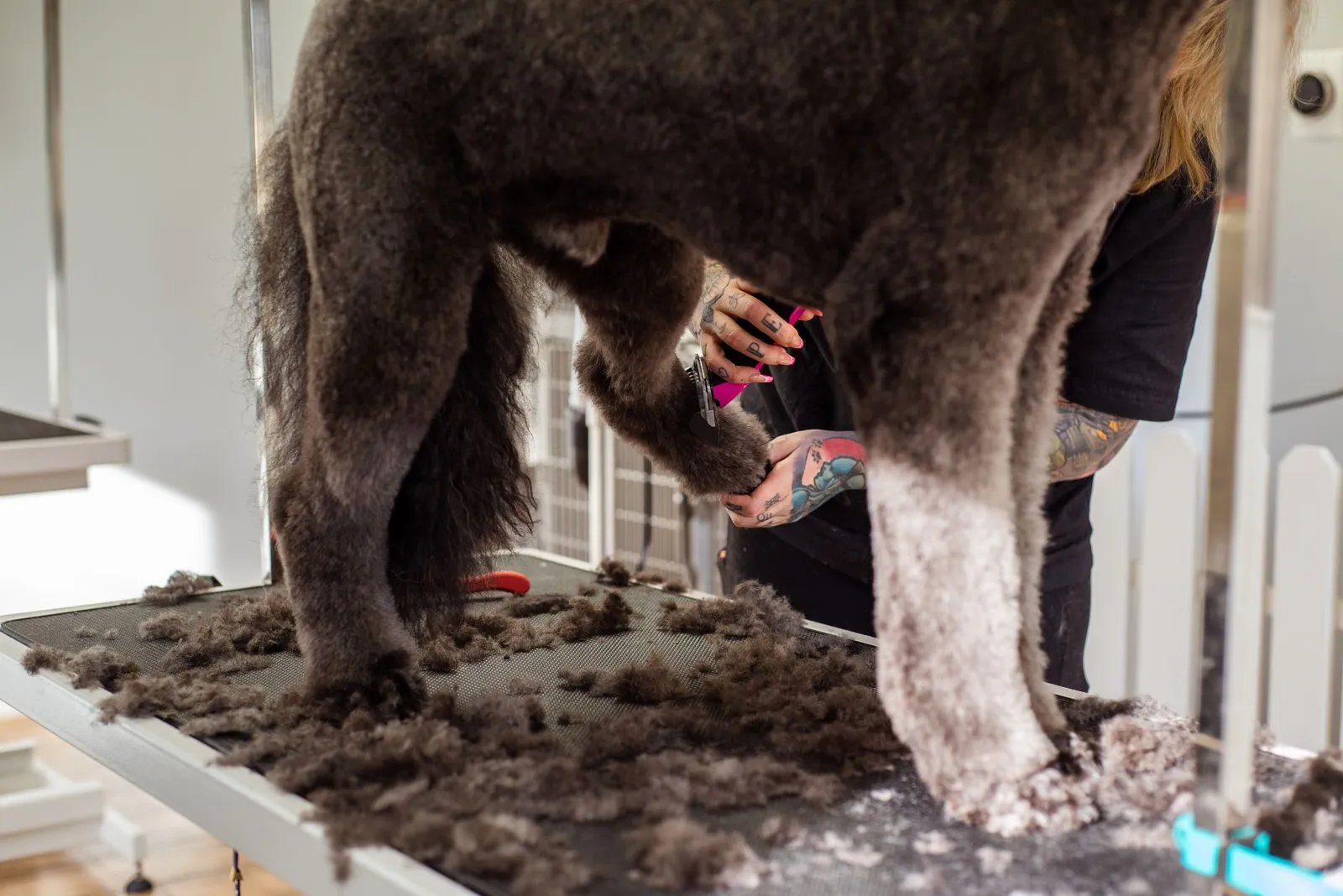
Dog grooming tables are sized by surface length and load rating, not by the cute breed photo on the product page.
Small dogs under about 12 kg usually fit a 60–75 cm surface. Medium dogs need closer to 90 cm so they can stand and turn without hovering over the edge. Large and giant breeds need 105–120 cm and a frame rated well above their weight — add roughly half again for a dog that shifts, leans, or tries a half-jump.
Never buy to the exact kilo your dog weighs today. A restless Labrador loads the frame harder than a calm one at rest. Check rubber feet and lockable hinges before you trust the listing. A wobble on tile is a fall waiting to happen.
Two dogs in the house means size for the larger one. Folding a too-small table under a German Shepherd is how sessions end early and coats go untouched.
Recommended products

Chonky Chimken Dog Food
From ₹99

Punchy Paneer Dog Food
From ₹99
Foldable, fixed, or hydraulic — pick for apartment space first
Three common dog grooming tables show up in home searches.
Foldable X-frame or Z-frame tables collapse flat and store behind a door or under a bed. Best default for Indian apartments. Slightly less rock-solid than a salon unit, but you will actually use something you can put away after Sunday grooming.
Fixed or stationary tables stay assembled. More stable, more permanent. Only worth it if you have a laundry room or balcony corner that can stay dedicated. Most 2BHKs cannot.
Hydraulic or electric lift tables adjust height with a pump or motor. Useful if you groom often, have back issues, or lift a heavy dog onto a high surface. Overkill for monthly brush-and-nail sessions on a calm Spitz. The quiet electric lift is kinder to anxious dogs than a jerky hydraulic pump — if you buy one, prefer smooth motion.
Portability beats prestige here. A foldable table you set up in ten minutes beats a heavy unit that lives in its shipping box forever.
The grooming arm and non-slip top are the safety features that matter
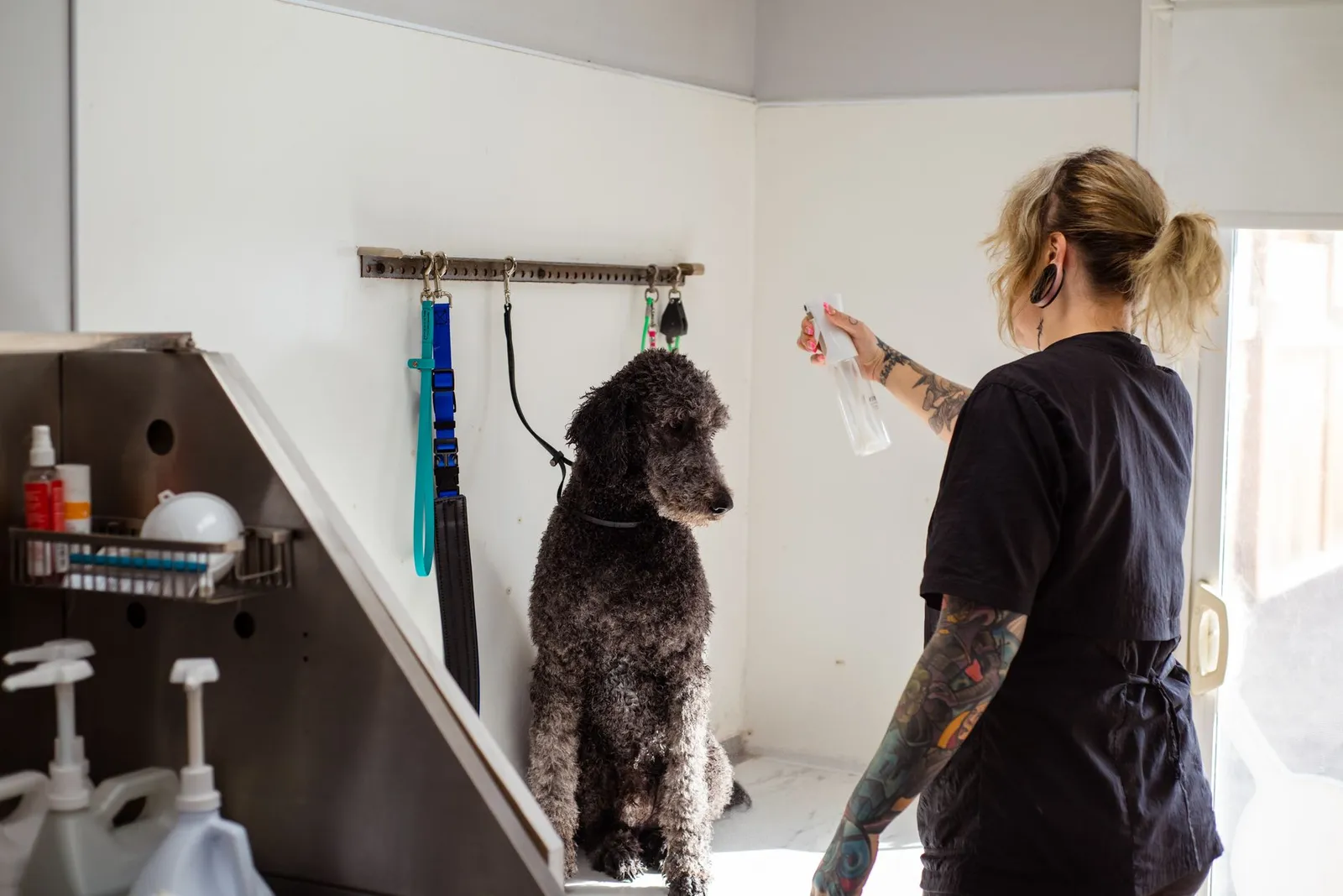
Skip any dog grooming table without a sturdy arm and a textured or rubberised top. Smooth laminate plus a wet paw equals a slide.
The loop or noose on the arm keeps the head steady while you work the body — it is not a hanging device. Fit it snug enough that the dog cannot leap, loose enough that breathing stays easy. Never walk away. The American Kennel Club S.A.F.E. grooming standards are blunt on this: pets cannot be left unattended on grooming tables. Home use gets the same rule.
Quick-release hardware helps if the dog panics. Practise opening it with one hand before the first real session. Introduce the table empty — treats on the surface, no tools — so height is boring before scissors appear.
The AVMA physical restraint guidance says the same thing in clinical language: least restraint for the least time, constant observation, and stop if fear spikes. If your dog freezes or fights the loop, the table is the wrong tool that day.
Set up once in the flat — then store it so monsoon does not win
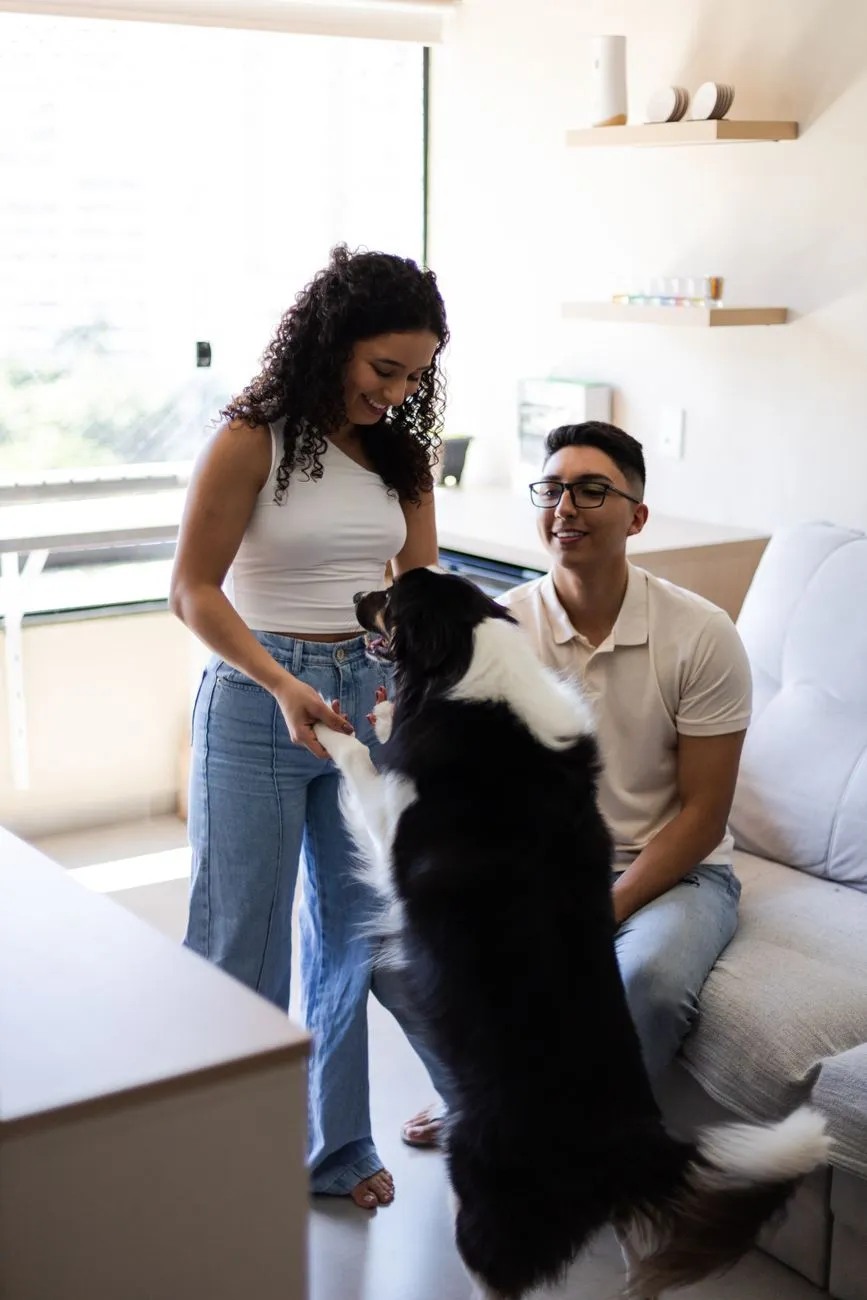
Pick a corner with flat flooring, a nearby socket for a clipper if you use one, and enough room to walk around three sides. Tile is fine if the table feet grip. Avoid oily kitchen floors.
Keep the setup away from the main walking lane so family traffic does not startle the dog mid-trim. Natural light helps you spot mats and skin. A small LED lamp fills shadows if the only free corner is dim.
Wipe the non-slip top after every session. Hair plus humidity equals smell. In monsoon, dry the frame fully before you fold it — trapped moisture rusts cheap hinges and grows that bathroom-cupboard odour. Prep the corner before the dog is on the table, not while they are already waiting.
Store the folded table upright in a dry cupboard with the arm detached so nothing bends. Dog grooming accessories and towels live in a labelled bin next to it so setup stays a five-minute job, not a scavenger hunt.
Dog grooming tools sit on the table — the table does not replace them
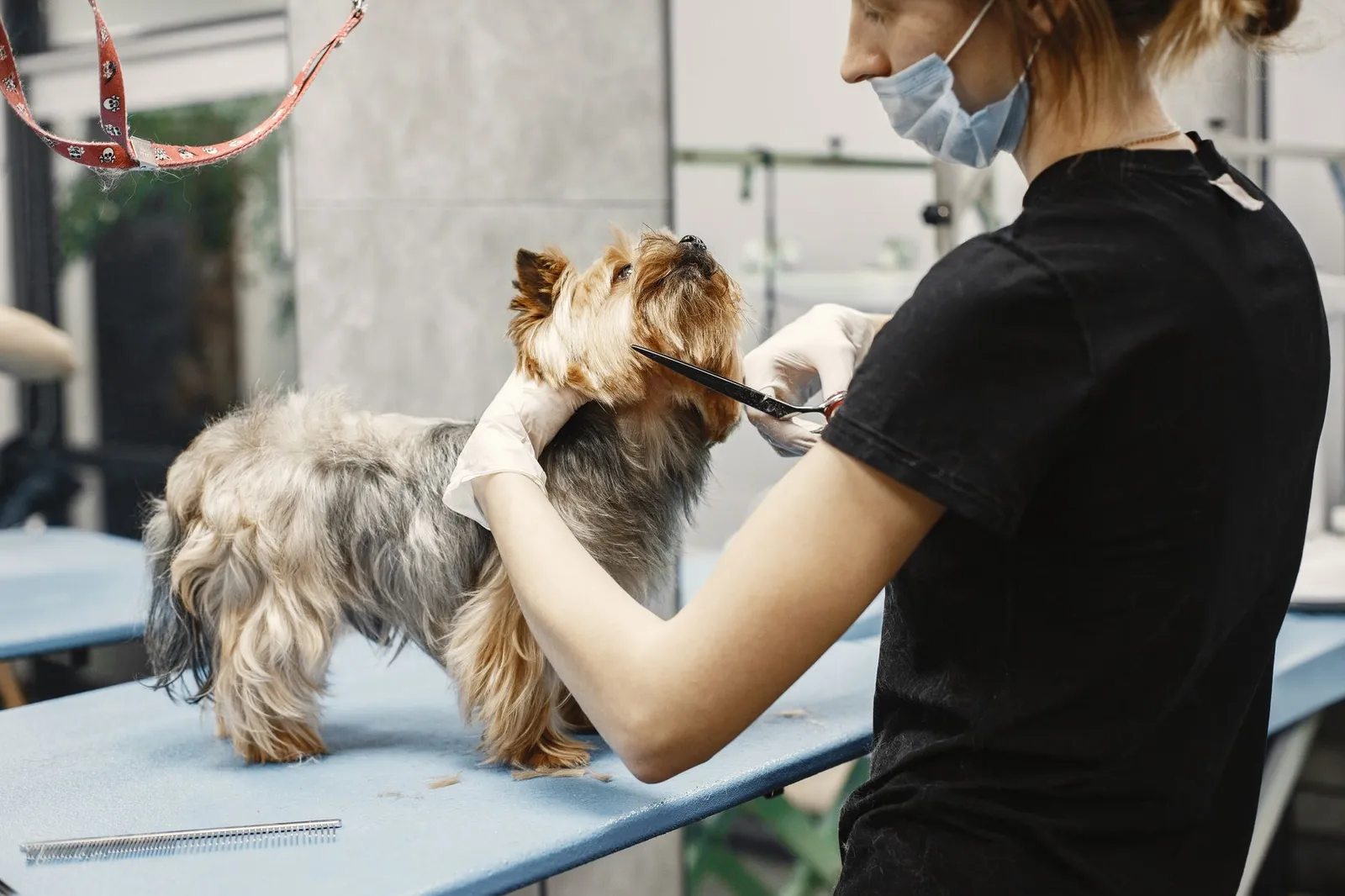
A raised surface makes brush work easier. It does not pick the brush for you.
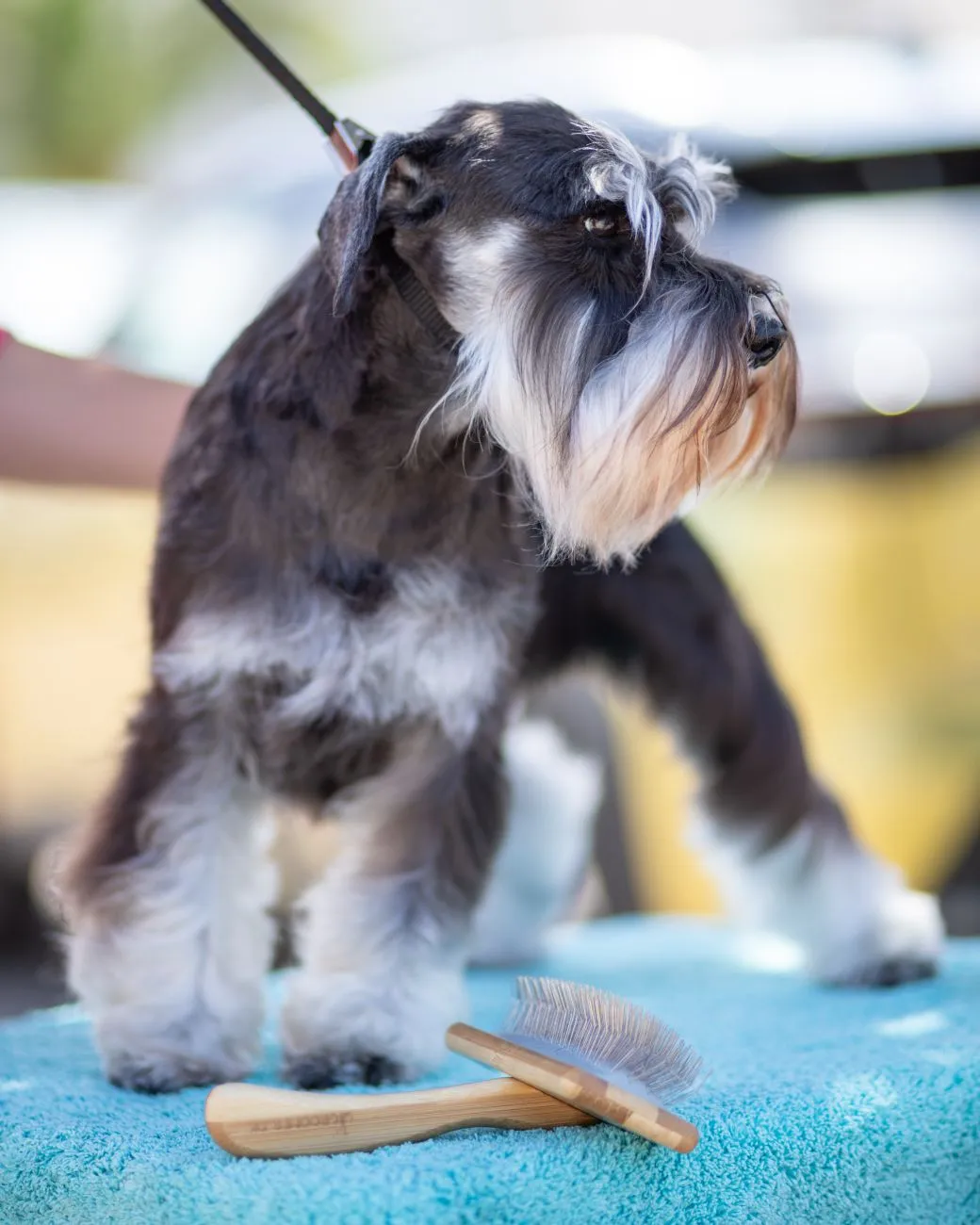
Keep coat-matched dog grooming tools within arm's reach: slicker or curry, metal comb, nail clippers or grinder, ear wipes, towels. Dog grooming scissors belong on the table only if you already know safe angles — rounded tips for paws and face fringe, never a first-time full body cut. A dog grooming trimmer is optional for hygiene zones once you have watched a pro and your dog tolerates vibration. Skip clippers entirely if you are guessing blade length on a double coat.
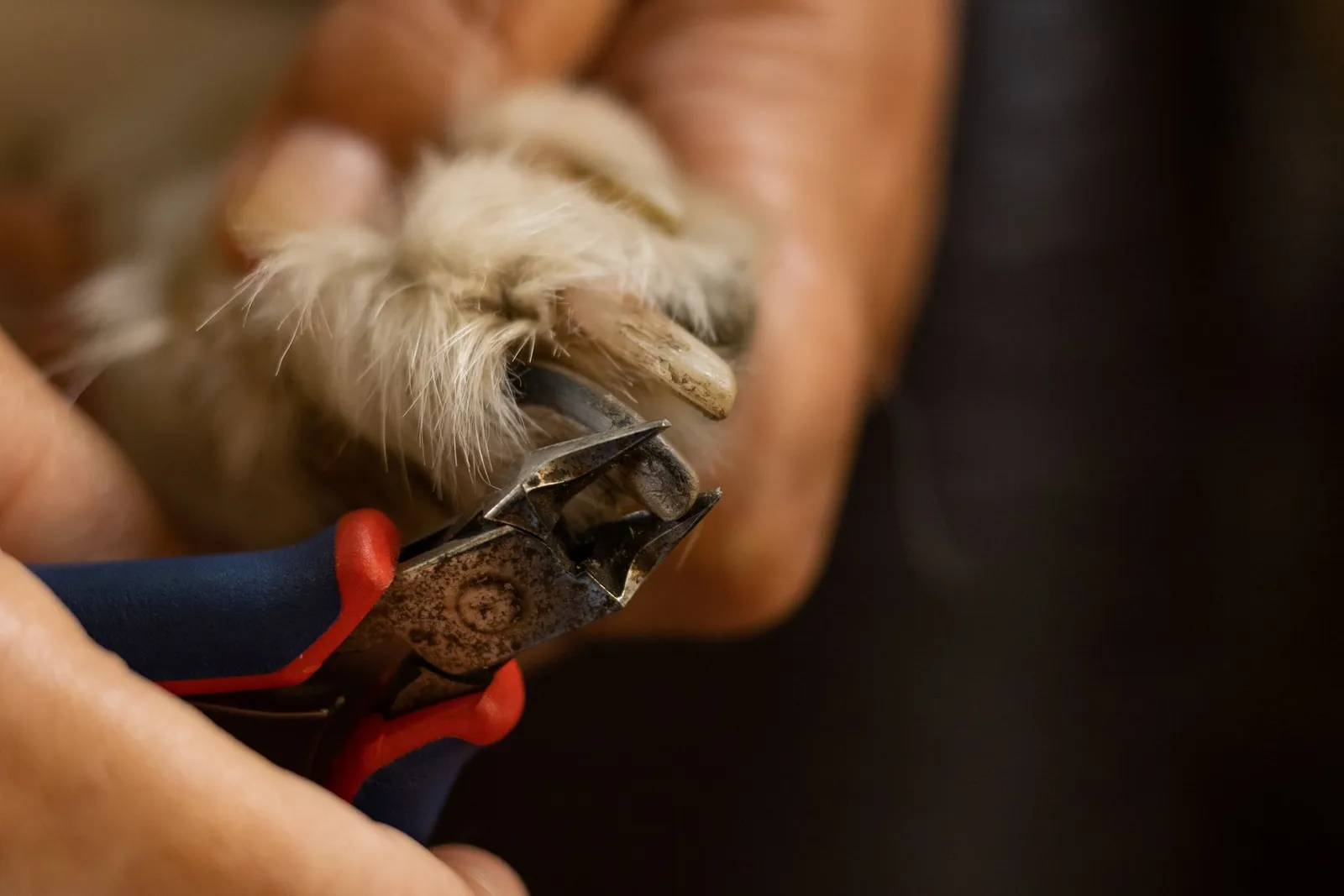
Our dog grooming brush guide covers which brush matches which coat. Our dog nail cutting walkthrough covers the quick. The table is just the stage those tools work on.
Honestly, brush twice a week before you need a groomer. Most matting is a maintenance problem. When brushing loses for three weeks straight, dematting runs ₹1,598 on average nationally — and a fancy table will not undo that bill.
When a dog grooming table is the wrong buy entirely
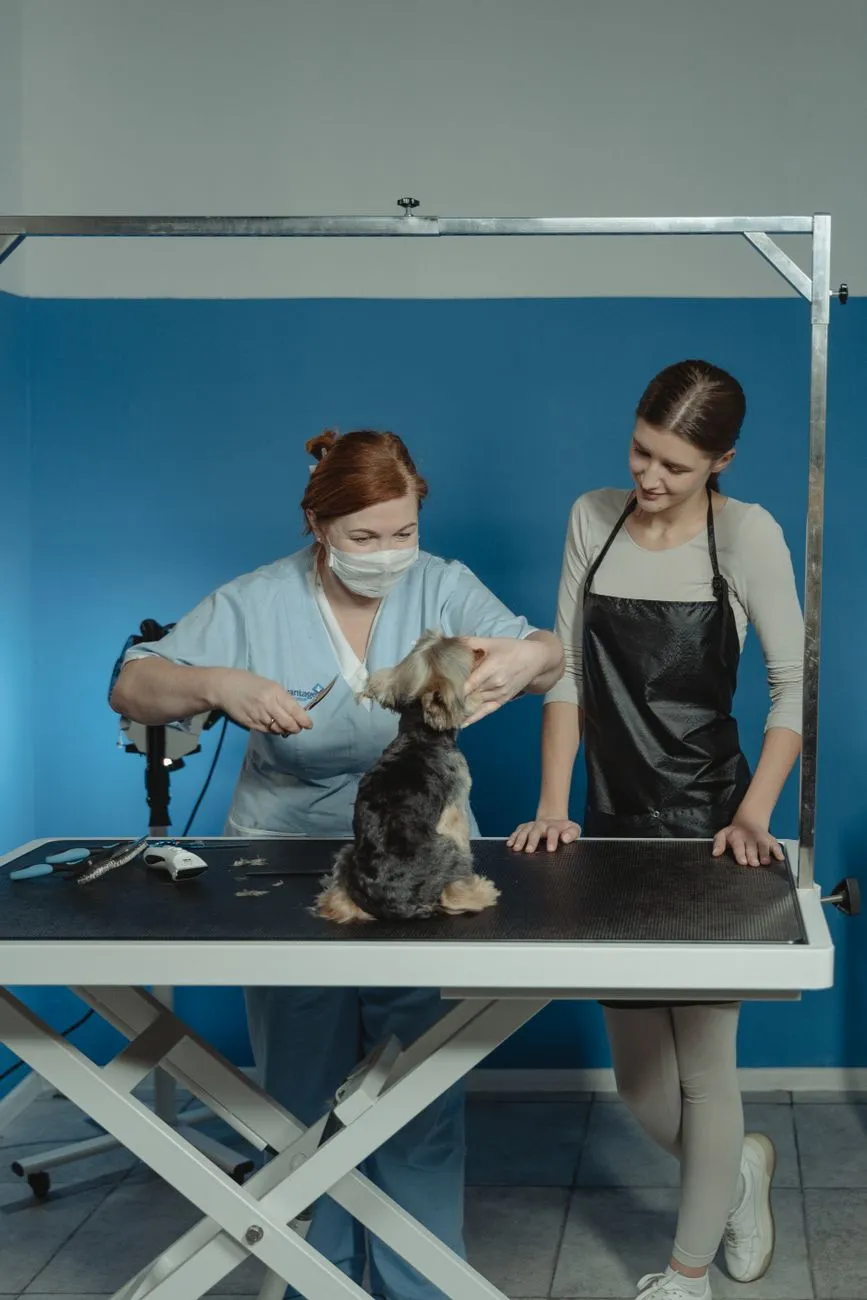
Do not buy a table if your dog is aggressive on restraint, has untreated skin disease, or fights every home groom until trust is gone. Vet or trainer first. Sploot is not a vet, and a table is not behaviour training.
Do not buy one for a one-off wedding haircut on a heavily matted coat. That is a salvage groom, not a DIY afternoon. Book a home visit instead.
We once worked with an elderly German Shepherd in Gurgaon named Sultan. Joint pain made salon trips hard. On a home visit he rested his head in the groomer's lap during the nail trim — the kind of calm a tall, unfamiliar table in a crowded salon rarely earns for a senior dog. For dogs like Sultan, doorstep care beats DIY furniture.
Fair call on when not to use Sploot: a calm short-coated indie who needs fifteen minutes of curry brushing on a table you already own — do that yourself. You do not need a ₹999 Bath and Blow Dry because dust landed on the sofa.
When you do need a pro, Bath and Blow Dry runs ₹999 on average nationally. Quarterly Bath plans land at ₹1,371 per session at the best price. Session reviews from Sploot dog parents average 4.78 stars across 3,361 reviews. If the comb test keeps failing or your dog cannot settle at height, I would book rather than force another DIY session — that is what sploot.space is for.
Straight answers
Do I need a dog grooming table for home grooming?
Only if you groom often enough that kneeling or bathroom tiles are stopping you. Occasional baths in a tub can work without one. Regular brush-and-trim maintenance is easier and safer on a raised non-slip surface with an arm.
What size dog grooming table should I buy?
Match surface length to your dog standing comfortably with room to turn. Small dogs: about 60–75 cm. Medium: around 90 cm. Large: 105–120 cm. Weight capacity should sit well above your dog's weight to handle shifting and lean.
Are foldable dog grooming tables safe?
Yes if the frame locks, feet grip, the top is non-slip, and you never leave the dog unattended. Test stability with firm pressure before the first session. Skip bargain tables that wobble on tile.
How do I get my dog used to a grooming table?
Treats on the empty table first. Short stand sessions with the loop loose. Tools later. End before the dog panics. If fear escalates across sessions, stop table work and book a calm home visit instead.
Can I leave my dog on the grooming table alone for a minute?
No. Not for a phone call, not for a towel. Falls and choking risks are real. Stay within arm's reach the entire time the dog is elevated and restrained.
Hydraulic vs electric dog grooming table — which is better at home?
For most apartments, a solid foldable fixed-height table is enough. If you need height adjust for a heavy or senior dog, prefer a smooth electric lift over a jerky hydraulic pump. Buy adjustability only if you will use it weekly.
What dog grooming accessories go with the table?
Arm and loop (usually included), non-slip mat if the top is smooth, coat-matched brushes, metal comb, nail tools, towels, and a bin for hair. Scissors and trimmers only after you know safe technique.
When should I skip the table and book a professional?
Mats on skin, aggression on restraint, senior mobility that makes jumping unsafe, breed cuts you have never done, or a dog that panics at height. That is home-visit territory — not a new piece of furniture.

FREE GUIDE
Feed your dog right: the complete nutrition guide
Portions, fresh food, treats and what to avoid. Everything about your dog's diet in one free guide.
Read More
Everything your dog needs, in one app.
Track sessions in real time, receive updates, manage bookings, shop essentials and stay connected to your dog's care journey—all from the Sploot app.