
In this post: not for mats — rounded tips — blade types — brush first — scissors vs trimmer — care and storage — when to stop — straight answers
Dog Grooming Scissors: Rounded Tips and Safe Home Trims
Pick dog grooming scissors by tip and blade type, learn safe face and paw trims, and know when DIY stops.

13 Jul 2026 · 2 min read
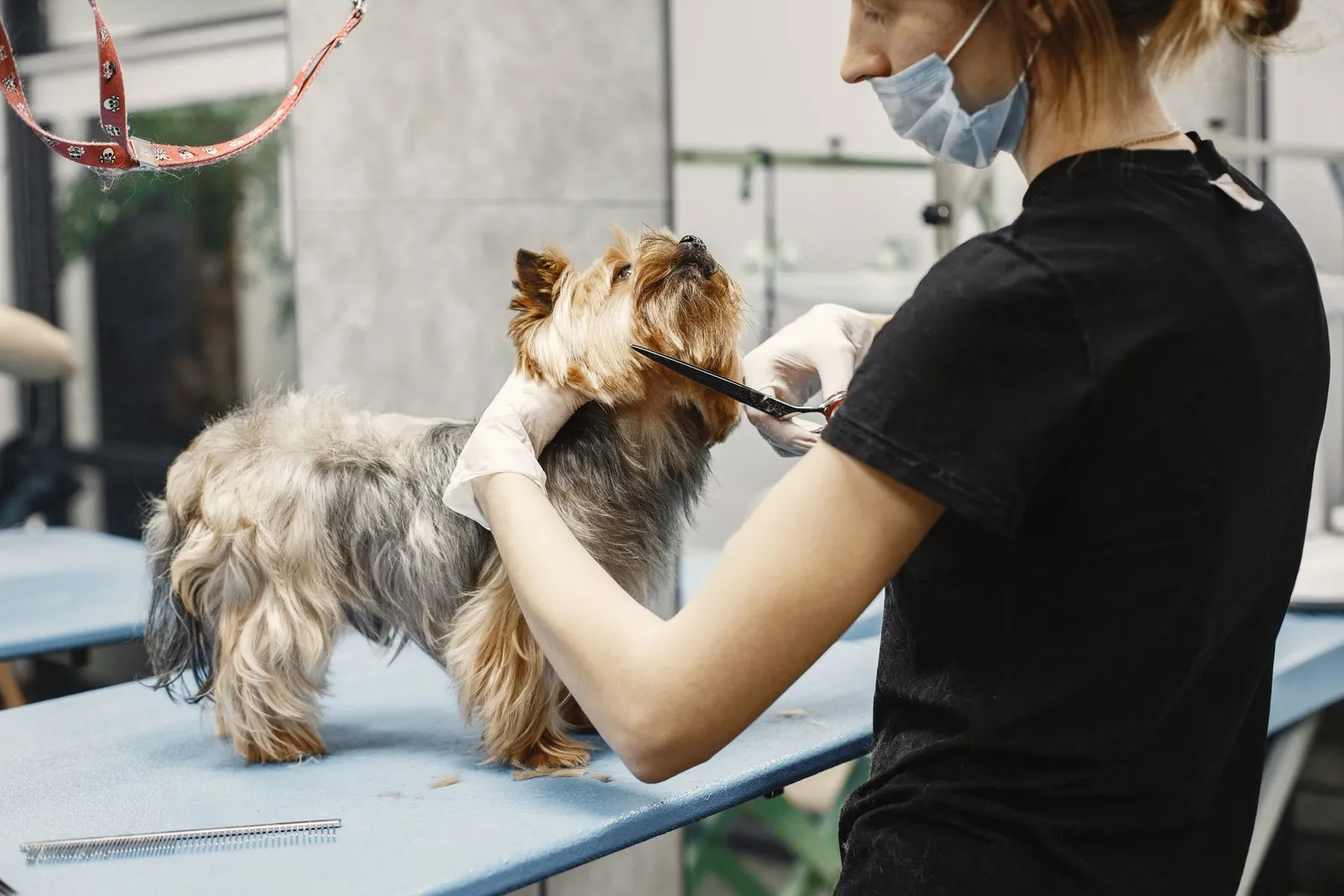
I once reached for kitchen scissors because the paw fringe looked uneven and the pet store was closed. The dog forgave me. My pride did not. Straight answer: dog grooming scissors are rounded-tip shears for tidy face, paw, and sanitary touch-ups between pro visits — not for hacking mats off skin, and never a substitute for a brush. If the comb already sticks, put the blades down.
This post stays on scissors for dog grooming — tip shape, blade types, and the jobs they should not do. Our dog grooming kit guide covers what else belongs in the drawer. Our dog grooming brush guide covers the work that should happen before any snip. Our dog haircut post covers full styles you should not invent in the bathroom.
Dog grooming scissors are for tidy edges — not for cutting out mats
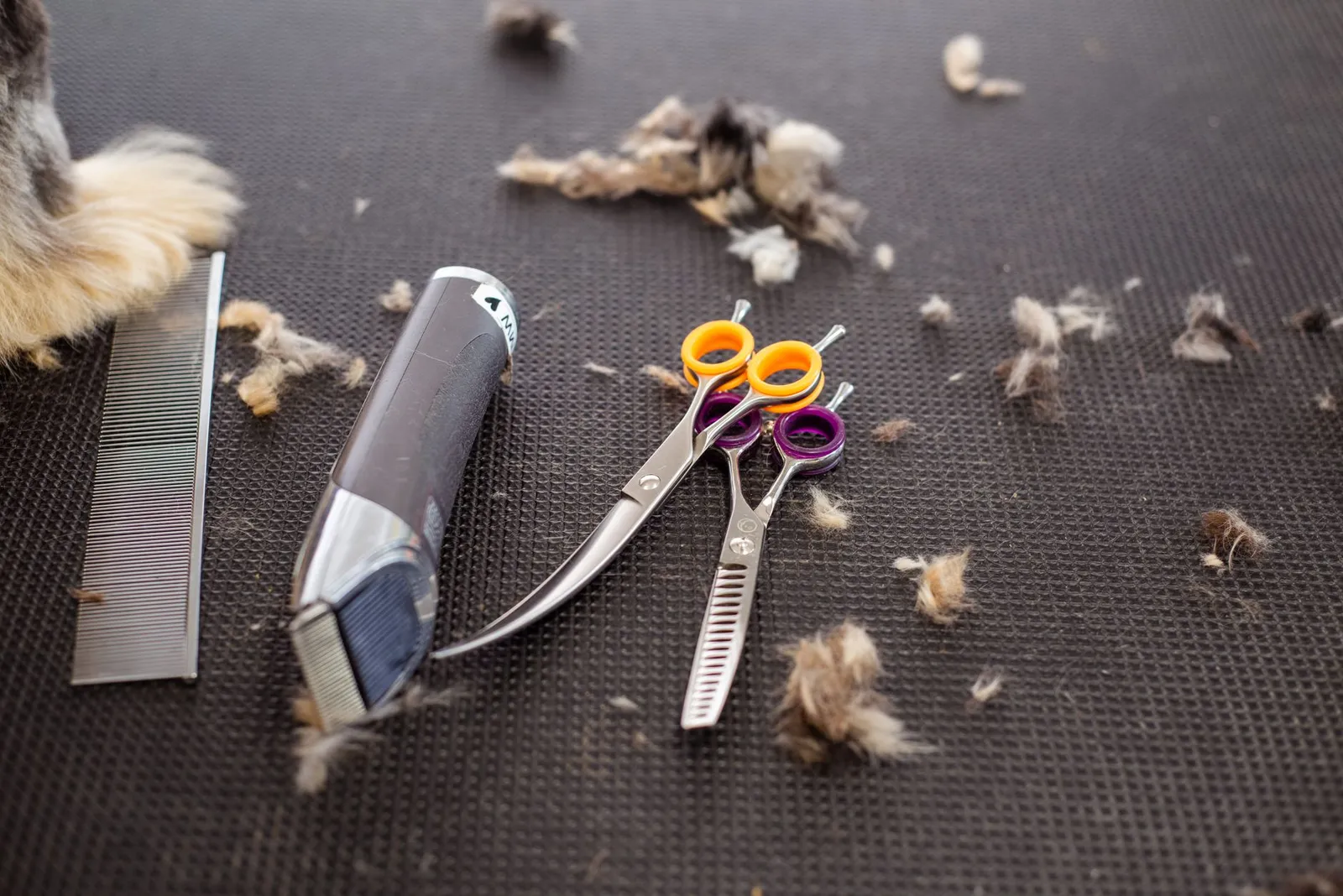
A mat is fused hair sitting on or near skin. Cutting into it with any blade is how nicks happen. Skin tents into the tangle. You think you are trimming fluff. You are not.
Rule of thumb: if a metal comb cannot pass through dry coat, you are in dematting territory — brush work, a pro demat, or a planned trim by someone who can see the skin. You are not in DIY scissor territory. Honestly, brush twice a week before you need a groomer. Most matting is a maintenance problem. When brushing loses for three weeks straight, dematting runs ₹1,598 on average nationally — and a sharp pair of dog grooming scissors will not undo that bill safely at home.
Kitchen scissors and human hair shears fail for the same reasons: pointed tips, wrong blade geometry, and no forgiveness when a dog flinches. PetMD on handling matting is blunt: scissors on mats are how skin gets sliced because the tangle sits against the surface. Buy scissors for dog grooming for tidy edges only, or leave the coat alone until a groomer arrives.
Rounded tips beat sharp points around eyes and paws
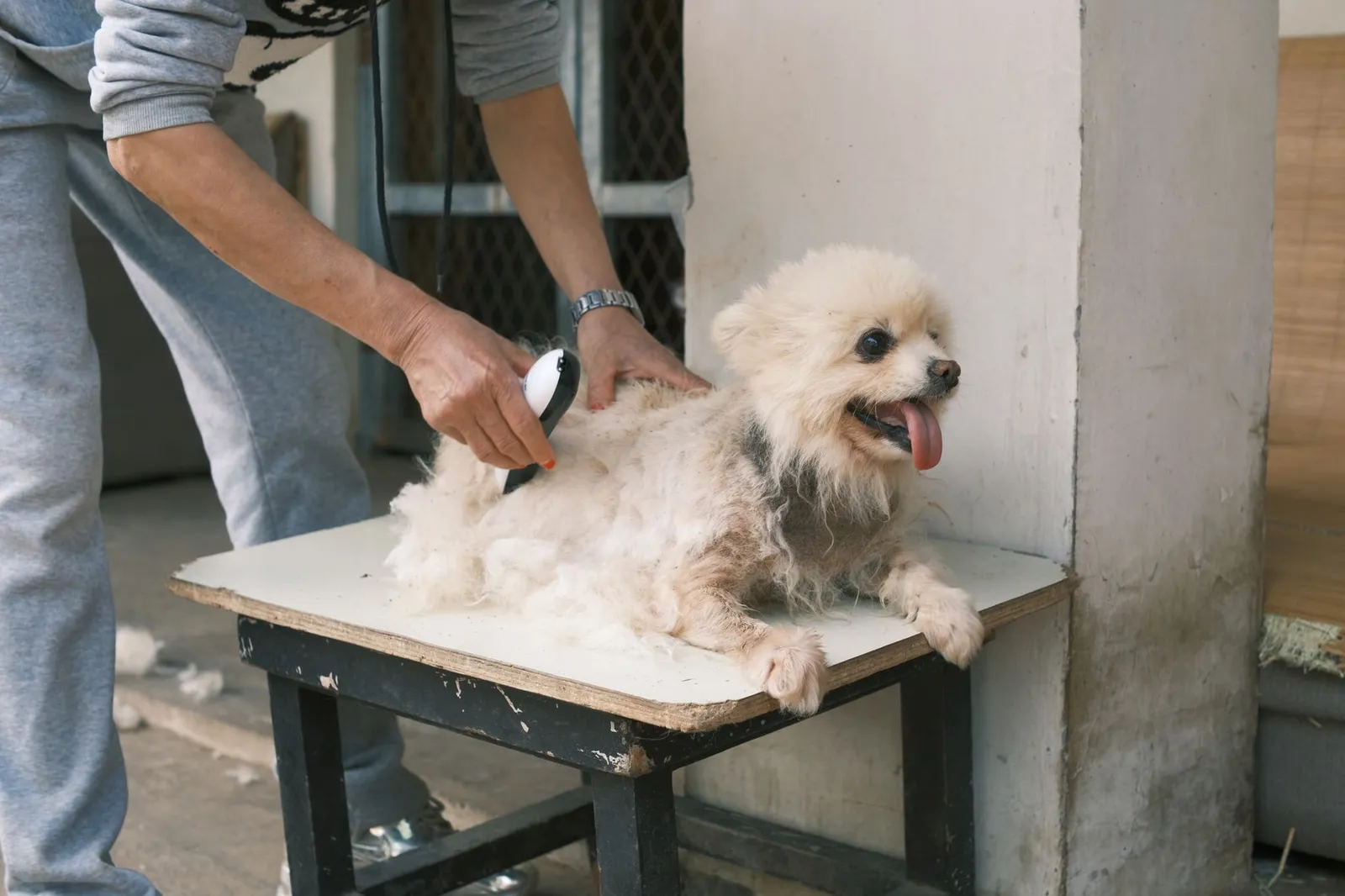
Look at the tip first, not the Instagram kit photo. Rounded or ball tips reduce the chance of a poke near eyes, nostrils, ear edges, and between toes. Pointed salon shears belong in trained hands on a calm dog — not in a first home trim on a wriggly Indie.
Hold the dog's head steady with one hand or a helper. Keep blade tips facing away from the eye. Take tiny snips, not long dramatic cuts. If the dog jerks, freeze and reset. The American Kennel Club grooming basics are blunt on patience: rushing is how accidents start.
Work on a non-slip surface. A bathroom floor with wet paws is a bad stage. If you already own a dog grooming table with an arm, use it — and never walk away while the dog is elevated and restrained. The AVMA physical restraint guidance says the same thing in clinical language: least restraint for the least time, constant observation, stop if fear spikes.
Recommended products

Chonky Chimken Dog Food
From ₹99

Punchy Paneer Dog Food
From ₹99
Straight, curved, and thinning shears do different jobs
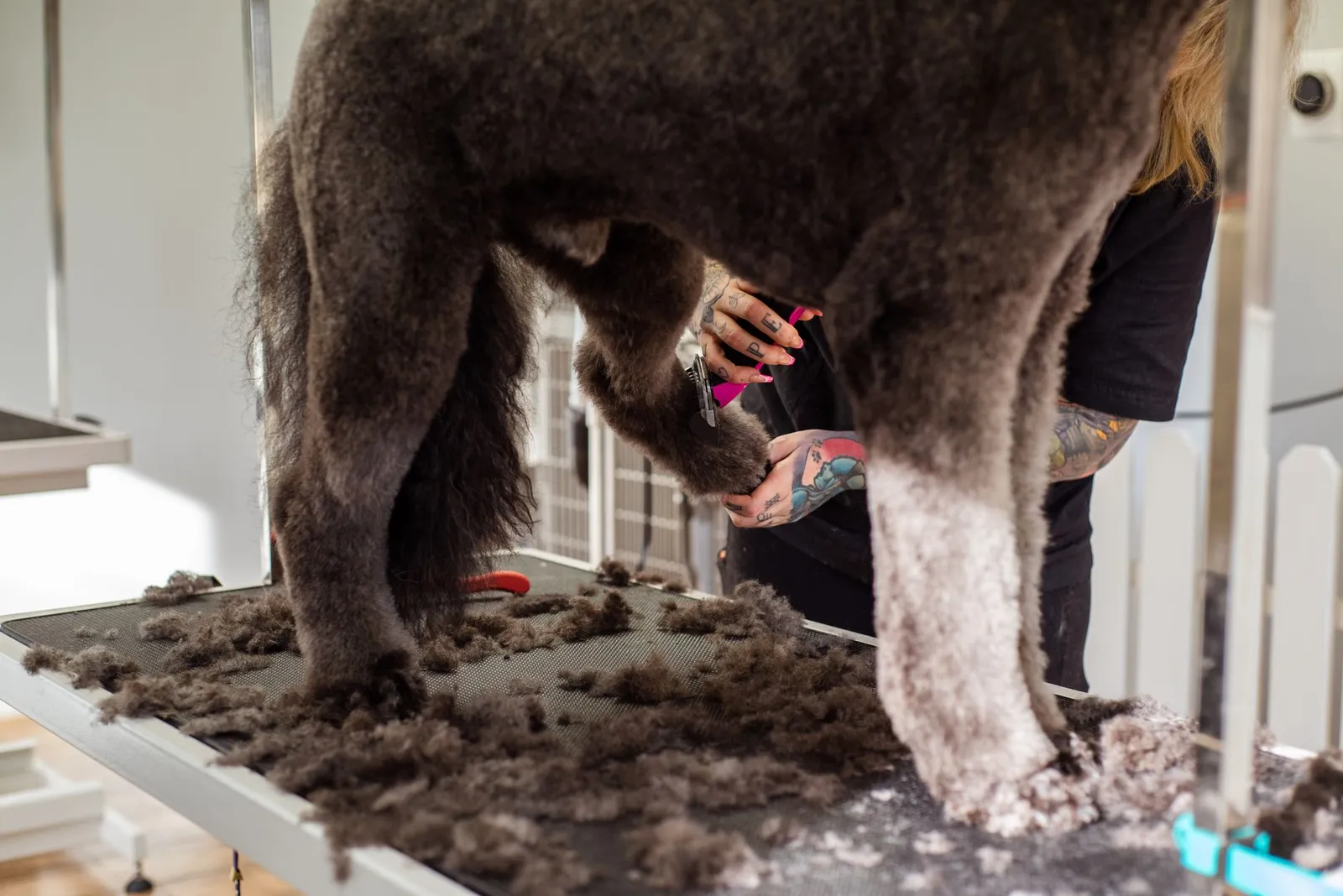
You do not need a five-piece set on day one. Most apartment dog parents need one safe pair.
Straight dog grooming scissors — general tidy cuts on body edges once the coat is tangle-free. Medium length (around 6–7 inches) is easier to control than salon-length blades meant for full body work.
Curved shears — follow the shape of a rounded face, chest line, or paw. Helpful for soft finishes after you already know how the dog sits for trims.
Thinning or blending shears — remove bulk without a hard line. Useful on thick coats that look choppy after a straight cut. Easy to overdo. Start sparse.
Chunkers and heavy sculpting shears are pro tools. Skip them until a groomer has shown you the coat and you are trimming the same dog every few weeks on purpose.
Buy stainless steel that opens smoothly. A sticky pivot pulls hair. Cheap blunt blades chew instead of cut — that is why dogs suddenly hate "scissors" after one bad session.
Scissors for dog grooming start after the brush and comb finish
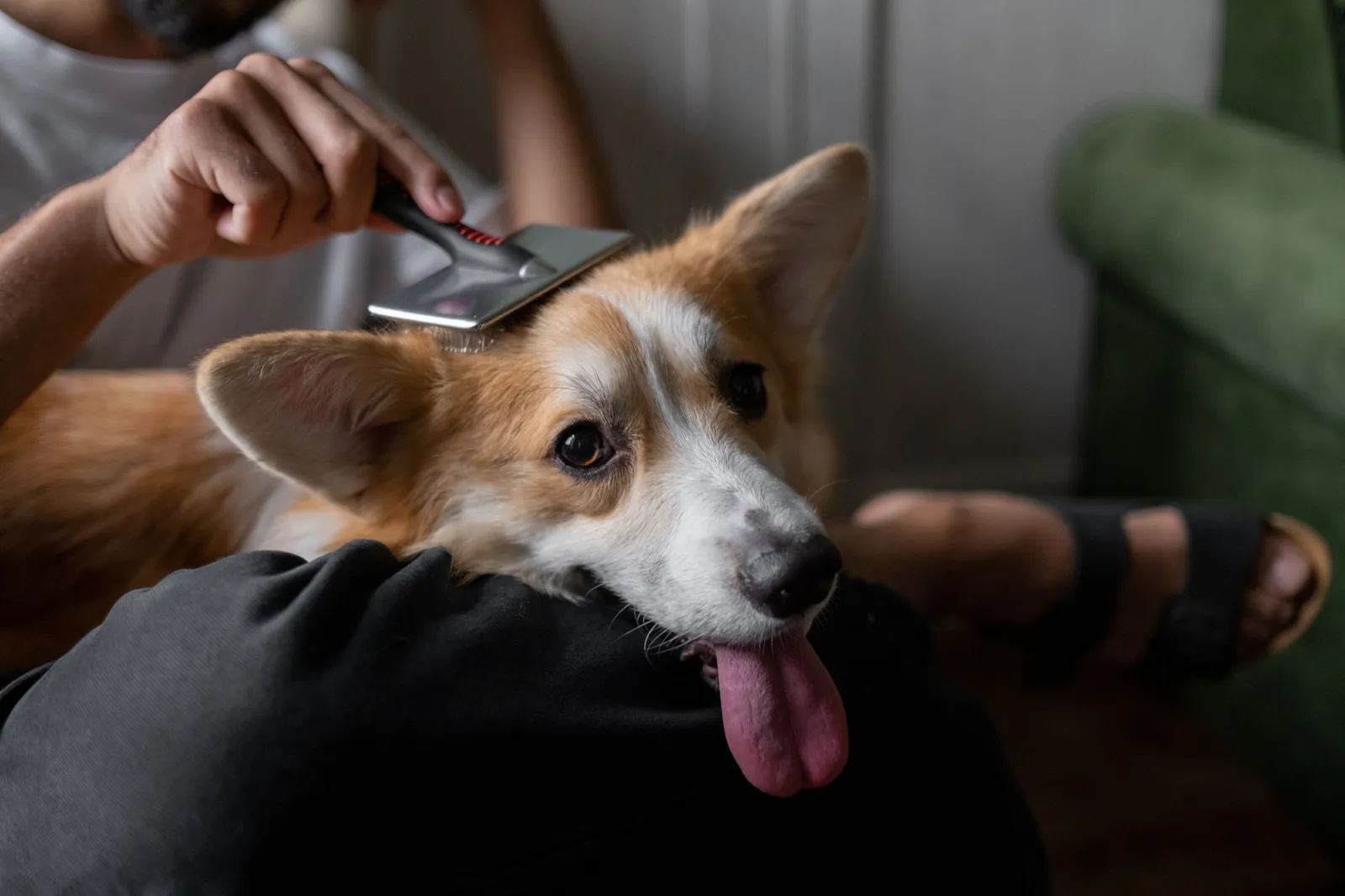
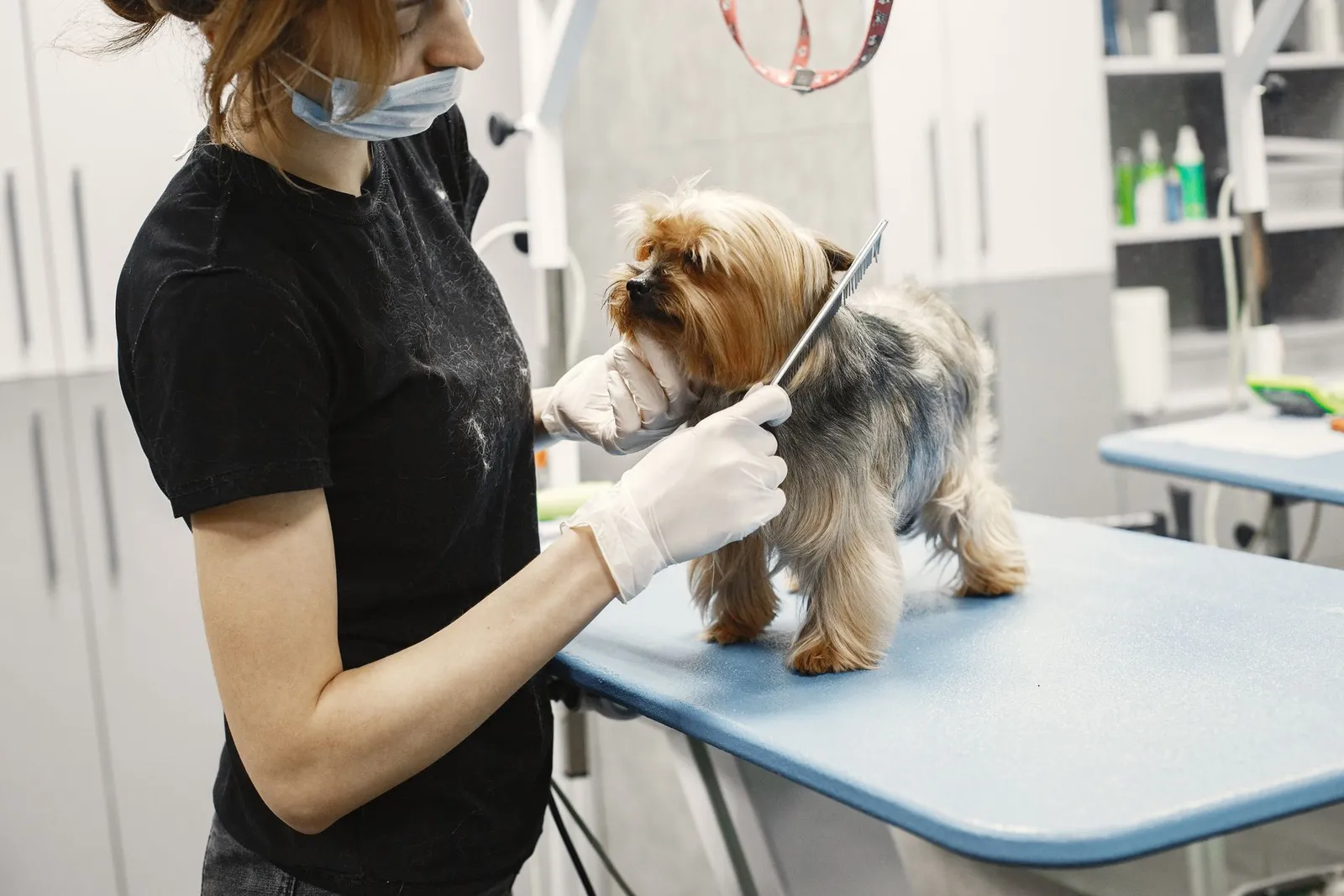
Scissors are the last tool in the sequence, not the first. Dry brush. Comb to skin. Only then trim the fringe that still sticks out past the shape you want.
Face fringe that blocks vision, paw fur that collects monsoon mud, and sanitary edges that stay soiled — those are fair home jobs on a calm dog. Full body dog hair cut shaping is not. That is clipper and scissor work with angles you learn by watching a pro, not by guessing from a photo of a Pomeranian on Instagram.
Keep dog grooming accessories within reach before the dog is on the mat: comb, towel, treats, and the one pair of scissors you trust. Mid-session hunting for tools is when attention drifts and blades wander.
Our pet grooming at home routine covers session order if you want the wider picture. PetMD how to bathe a dog also stresses prep and calm handling before water — the same patience applies before scissors. Here the only rule that matters is: tangled coat means no scissors yet.
A dog grooming trimmer is not a shortcut past scissor skill
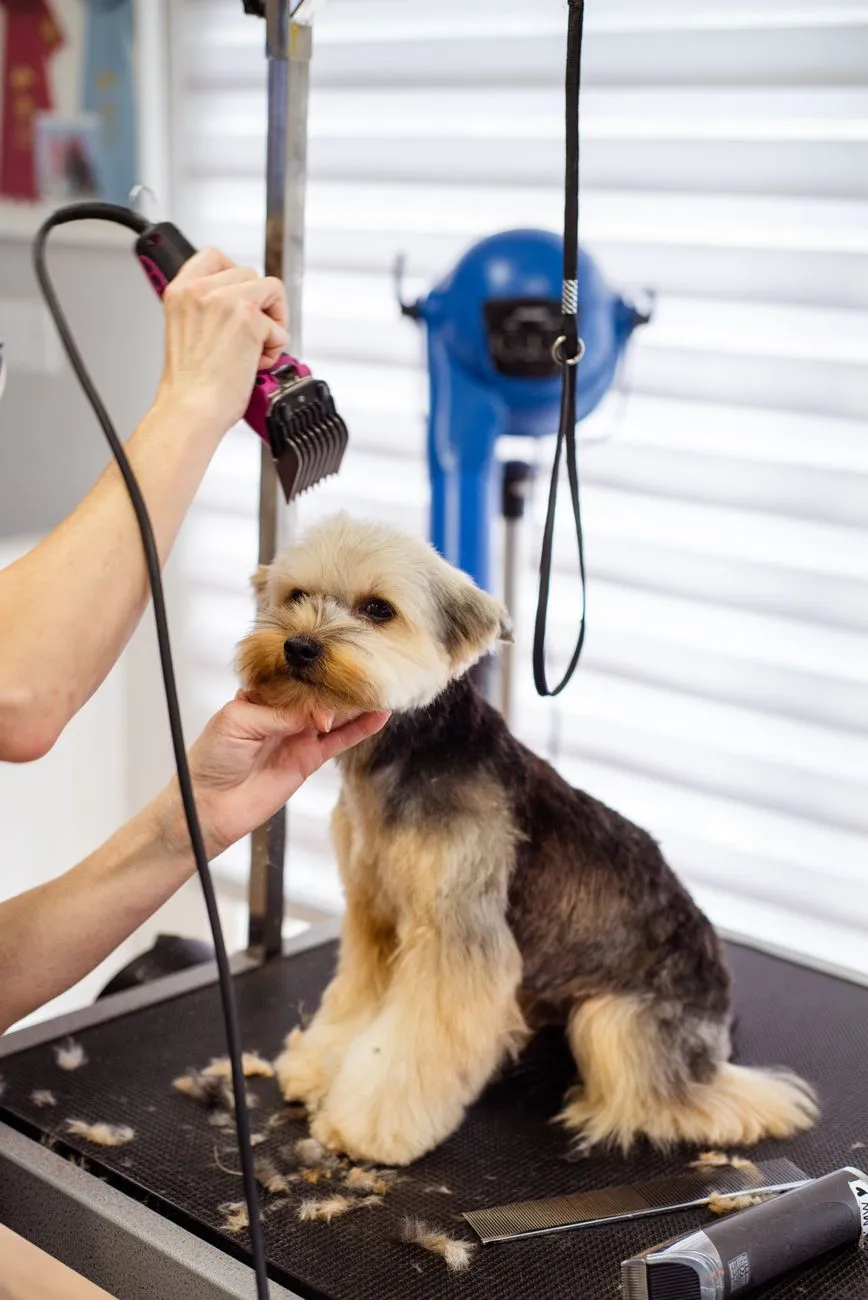
A dog grooming trimmer (clipper) removes length fast. Scissors finish edges and detail. They are not interchangeable.
Skip clippers entirely if you are guessing blade length on a double coat — shaving a double coat for "summer comfort" is how coats grow back wrong and skin burns in Indian sun. Prefer scissors for tiny touch-ups. Prefer a booked trim when you want an even body length.
If you do use a trimmer later, introduce vibration on a dry, brushed coat with treats first. Noise-sensitive dogs often tolerate quiet rounded-tip snips better than a buzzing motor. That preference is data, not a personality flaw.
Store and sharpen them or they start pulling coat
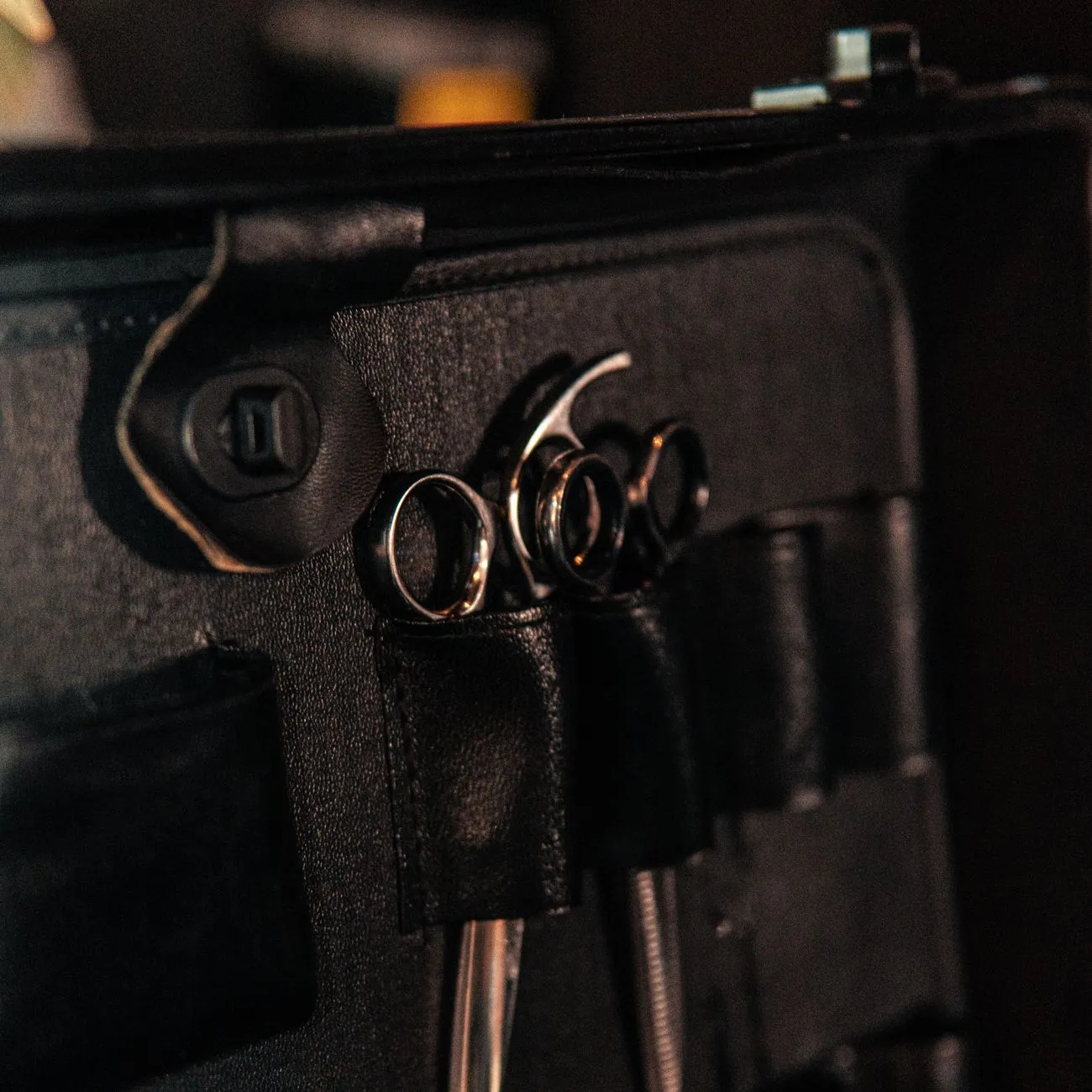
Wipe blades after every use. Hair and humidity dull edges and leave that bathroom-cupboard smell on the pivot. Dry fully before the case closes — monsoon storage is where cheap steel rusts.
Oil the screw lightly on a schedule the maker suggests. Store tips guarded so they do not bang against nail clippers in the same pouch. Dull dog grooming tools pull coat. Pulling makes dogs fight the next session. Fighting makes you reach for bigger cuts. That spiral is avoidable.
Sharpen through a service that understands pet shears, or replace when the cut starts chewing. Do not "fix" a nick by forcing harder.
When scissors in your drawer are the wrong tool entirely
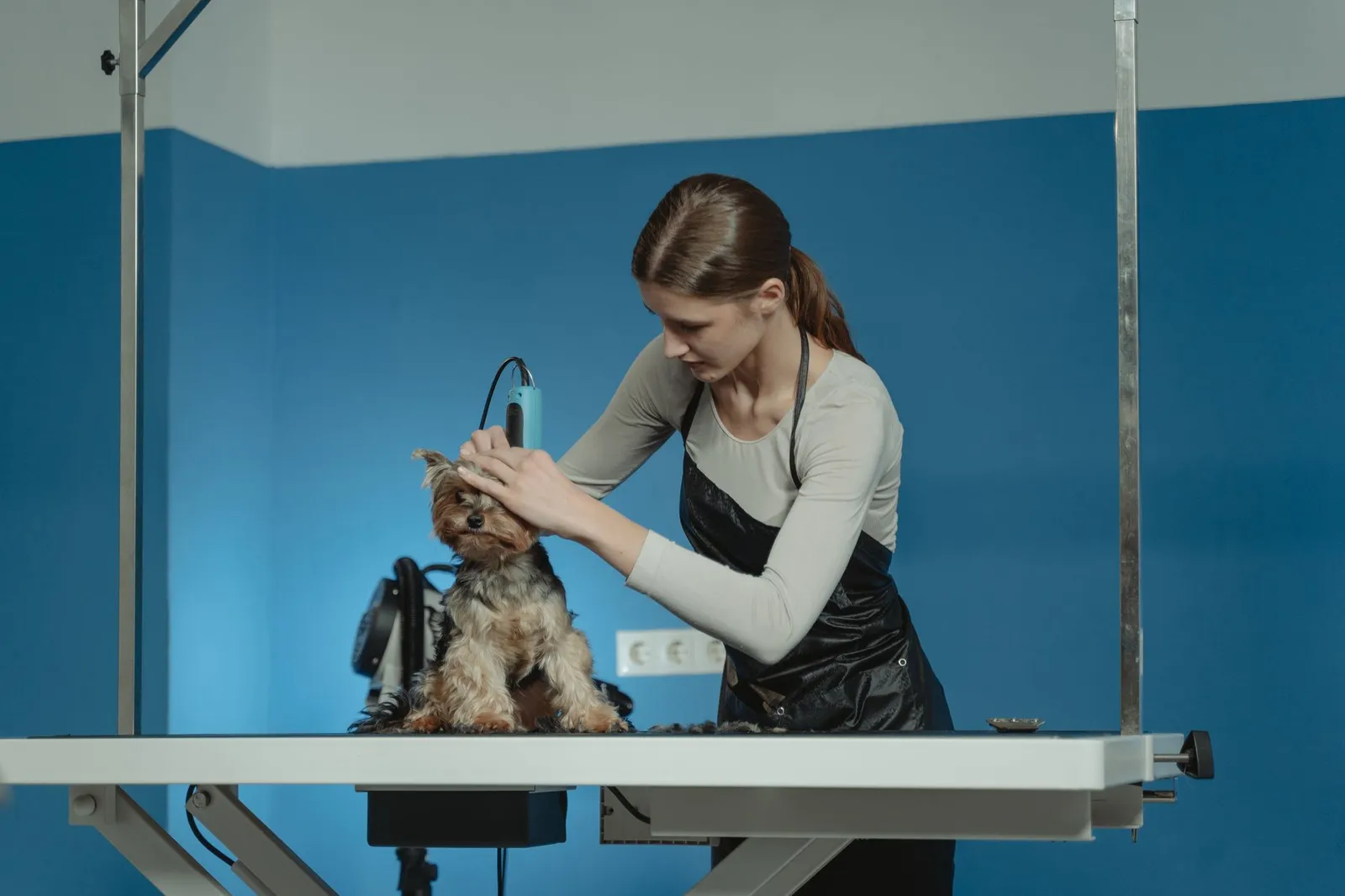
Put them away if mats sit on skin, if the dog snaps at restraint, if you cannot see where the skin is, or if you are inventing a breed cut you have never practised. Vet or trainer first when aggression shows. Sploot is not a behaviour service, and scissors are not training.
Fair call on when not to use Sploot: a calm short-coated dog who needs three minutes of paw fringe with rounded dog grooming scissors you already own — do that yourself. You do not need a ₹2,499 Full Grooming and Spa Package because one toe tuft looked untidy on the sofa.
Our dog Sriracha has been the unofficial product tester for grooming gear and home-visit flow for years. If a tool makes her brace or go still in that wrong way, we assume other dogs will feel it too. Blades that pull are a hard no. Sessions that stay short and predictable are the ones she accepts — and that is the bar I want for DIY trims at home.
When you do need a pro, Bath and Blow Dry runs ₹999 on average nationally. Bath and Trim on a quarterly plan lands at ₹1,959 per session at the best price. Session reviews from Sploot dog parents average 4.78 stars across 3,361 reviews. If the comb keeps failing or your dog cannot settle for face work, I would book rather than force another snip — that is what sploot.space is for.
Straight answers
Can I use human scissors for dog grooming?
No. Pointed human shears and kitchen scissors nick skin more easily and chew coarse coat. Buy rounded-tip scissors made for pets, or leave detailed trims to a groomer.
What dog grooming scissors should a beginner buy first?
One pair of rounded-tip straight or lightly curved shears around 6–7 inches, stainless steel, smooth pivot. Add thinning shears only after you can trim face and paws without stress — yours or the dog's.
Are thinning shears safe at home?
Yes for light blending on a tangle-free coat if you take sparse passes. No for dematting or bulk removal near skin. Over-thinning leaves bald patches that grow in uneven.
How do I trim fur around my dog's eyes safely?
Brush first. Hold the head still. Tips away from the eye. Tiny snips only. Stop if the dog jerks. If you cannot keep the head steady alone, skip DIY eye work.
Can dog grooming scissors remove mats?
No. Cutting mats risks cutting skin. Brush, demat early, or book a professional before the tangle reaches skin.
Scissors or a dog grooming trimmer for home touch-ups?
Scissors for small face, paw, and edge work on a calm dog. Trimmers for length removal once you know blade guards and coat type. Neither replaces brushing.
How often should I use scissors between full grooms?
Only when fringe actually interferes with vision, hygiene, or mud collection — not on a weekly aesthetic schedule. More brushing usually means fewer emergency snips.
When should I book a professional instead of trimming at home?
Mats on skin, aggression, senior dogs who cannot stand for long, breed cuts you have never done, or any session where fear escalates. That is home-visit territory — not a sharper blade.

FREE GUIDE
Feed your dog right: the complete nutrition guide
Portions, fresh food, treats and what to avoid. Everything about your dog's diet in one free guide.
Read More
Everything your dog needs, in one app.
Track sessions in real time, receive updates, manage bookings, shop essentials and stay connected to your dog's care journey—all from the Sploot app.